

The landscape of medical research has undergone substantial transformation, driven by cumulative knowledge and technological innovation. Examining historical records reveals a consistent trajectory of inquiry, characterized by both incremental progress and paradigm shifts. This article surveys key developments, highlighting how past discoveries laid foundational stones for contemporary medical practice.
The earliest forms of medical research were largely observational, drawing conclusions from empirical evidence and anatomical dissection. Before the advent of controlled experiments, understanding of the human body and disease processes was constrained by direct experience.
From Humors to Anatomy: The Greeks and Beyond

Ancient Greek physicians, notably Hippocrates and Galen, articulated theories that, while often erroneous by modern standards, represented significant attempts to systematize medical knowledge. The humoral theory, proposing that health depended on the balance of four bodily fluids, dominated Western medicine for centuries. Despite its inaccuracies, it provided a framework for understanding physiological states.
Concurrent developments in anatomy by figures such as Herophilus and Erasistratus, who performed dissections, began to challenge purely theoretical understandings. Their work, though limited by ethical and technological constraints, marked the beginning of a shift towards empirical observation of biological structures.
The Renaissance and the Scientific Gaze

The Renaissance brought a resurgence of inquiry. Andreas Vesalius, through his seminal work De humani corporis fabrica (On the Fabric of the Human Body), meticulously documented human anatomy, often correcting Galen’s errors. Vesalius’s detailed illustrations and reliance on direct observation rather than ancient texts established a new standard for anatomical study, marking a crucial step towards scientific medicine. His work illustrated the human body as a complex machine, inviting closer inspection rather than speculative reasoning.
William Harvey’s description of blood circulation in Exercitatio Anatomica de Motu Cordis et Sanguinis in Animalibus (Anatomical Exercise on the Motion of the Heart and Blood in Animals) in the 17th century provided another pivotal insight. Prior to Harvey, the understanding of blood flow was fragmented and largely incorrect. His systematic experiments and logical deductions demonstrated the heart’s role as a pump and the continuous circulation of blood, a fundamental physiological concept.
The Age of Microscopy and Microbiology
The invention and refinement of the microscope opened a new world, revealing hitherto invisible components of life and disease. This technological leap fueled significant advances in understanding disease etiology and cellular processes.
Unveiling the Microscopic World
Antonie van Leeuwenhoek’s crude microscopes in the 17th century allowed him to observe microorganisms, which he called “animalcules.” While he did not immediately connect these observations to disease, his work laid the groundwork for future microbiological discoveries. His observations, though early, revealed a hidden universe that fundamentally altered perceptions of biological complexity.
The 19th century witnessed more sophisticated microscopy. Robert Hooke observed cellular structures in plants, coining the term “cell.” This concept solidified through the work of Matthias Schleiden and Theodor Schwann, who proposed the cell theory, stating that all living organisms are composed of cells, and cells are the fundamental unit of life. This provided a common denominator for understanding biological organization, from the smallest bacterium to the largest organism.
Germ Theory and Infectious Disease
The greatest impact of microscopy on medicine came with the development of germ theory. Louis Pasteur, through a series of elegant experiments, demonstrated that microorganisms cause fermentation and spoilage, and subsequently, diseases. His work on pasteurization and vaccines for rabies and anthrax provided tangible evidence for the germ theory and practical solutions.
Robert Koch further solidified the germ theory by establishing a set of postulates to link specific microorganisms to specific diseases. His identification of the bacteria responsible for anthrax, tuberculosis, and cholera initiated a new era in infectious disease control. Koch’s postulates provided a rigorous scientific framework for identifying pathogens, akin to providing a unique fingerprint for each culprit in a biological crime. This shift from miasma theory, which attributed disease to “bad air,” to a pathogen-specific understanding, revolutionized public health and preventative medicine.
Pharmaceutical Discoveries and Therapeutic Innovations
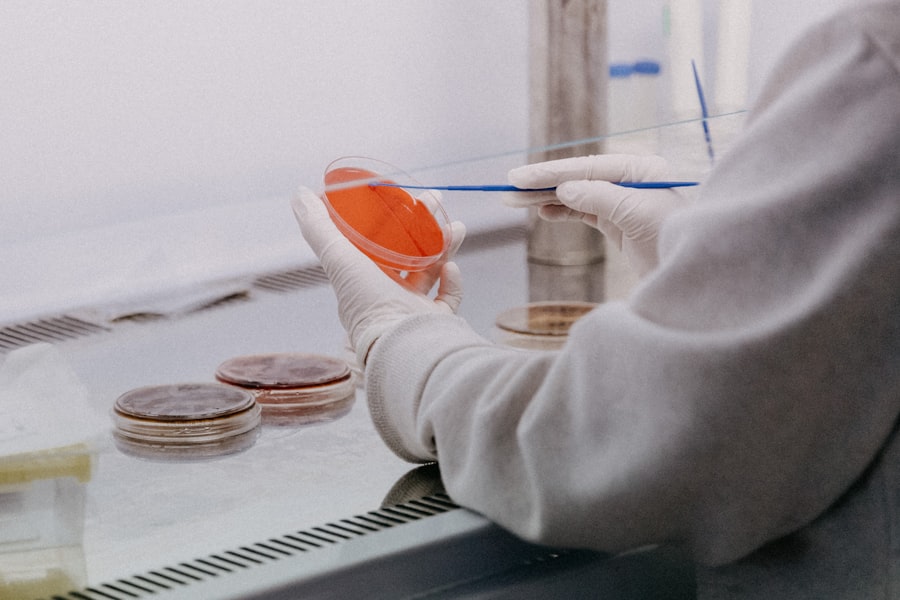
The development of pharmacological agents has been a continuous process, evolving from traditional remedies to targeted molecular therapies. Each discovery, whether serendipitous or deliberately engineered, offered new tools against disease.
Early Pharmacological Interventions
Ancient civilizations utilized a wide array of plant-derived medicines. Opium for pain relief, cinchona bark for malaria, and digitalis for heart conditions were among the enduring remedies. While their mechanisms of action were poorly understood, their efficacy was observed through generations of empirical use. This reliance on natural products laid the foundation for modern pharmacology, even if the underlying science was yet to be fully uncovered.
The 19th century brought the isolation of active compounds from plants, such as morphine from opium and quinine from cinchona. This purification allowed for more controlled dosing and clearer observation of effects, moving towards a more systematic approach to drug development.
The Antibiotic Revolution
The discovery of penicillin by Alexander Fleming in 1928, and its subsequent development as a therapeutic agent by Howard Florey and Ernst Chain, marked a watershed moment in medicine. Antibiotics transformed the prognosis for bacterial infections, which had previously been fatal. This was not merely an incremental step; it was a fundamental shift, akin to finding a universal key for a previously impregnable fortress of bacterial disease. The success of penicillin spurred the search for other antimicrobial agents, leading to a cascade of antibiotic discoveries that reshaped infectious disease management.
Diagnostic Tools and Imaging Technologies
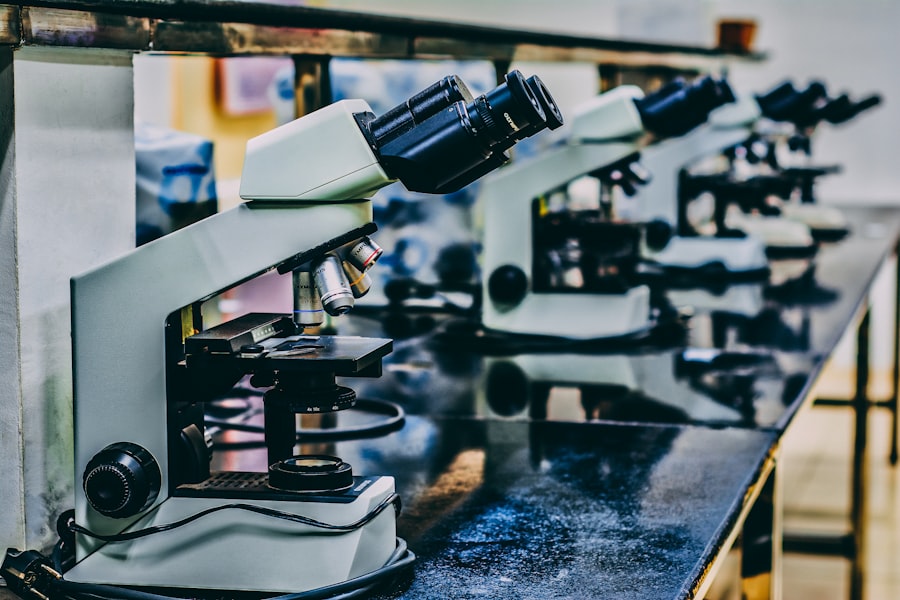
Accurate diagnosis is a cornerstone of effective medicine. Innovations in diagnostic tools have allowed clinicians to peer inside the body with increasing clarity and precision, fundamentally altering how diseases are identified and monitored.
Visualizing the Invisible: X-rays and Beyond
Wilhelm Röntgen’s discovery of X-rays in 1895 revolutionized diagnostic medicine. For the first time, physicians could visualize internal structures without invasive surgery. The ability to see broken bones, foreign objects, and organ abnormalities marked a significant leap forward. X-rays provided a rudimentary map of the interior, paving the way for more detailed explorations.
The 20th century saw the development of increasingly sophisticated imaging techniques. Computed Tomography (CT) scans, developed in the 1970s, provided cross-sectional images, offering far greater detail than conventional X-rays. Magnetic Resonance Imaging (MRI), emerging shortly after, utilized magnetic fields and radio waves to generate detailed images of soft tissues, unparalleled by previous methods. These technologies provided three-dimensional insights into the body’s internal landscape, allowing for the precise localization of disease and injury.
Laboratory Diagnostics and Biomarkers
Parallel advances occurred in laboratory diagnostics. Blood tests, urine tests, and tissue biopsies became increasingly common, offering insights into physiological function and disease markers. The development of immunoassays, which detect specific proteins or antibodies, allowed for the identification of infectious agents, hormonal imbalances, and cancer markers with high specificity. These tests provide a detailed chemical and biological fingerprint of a patient’s health status, enabling earlier and more accurate diagnoses.
Modern Medical Research: Genetics and Precision Medicine
| Metric | Value | Details |
|---|---|---|
| Impact Factor | 1.5 | Reflects average citations per paper in the last 2 years |
| Publication Frequency | Monthly | 12 issues published annually |
| Acceptance Rate | 25% | Percentage of submitted manuscripts accepted for publication |
| Average Time to Publication | 90 days | From submission to online publication |
| Indexed In | PubMed, Scopus, Web of Science | Major scientific databases |
| Open Access | Yes | All articles freely available to readers |
| Number of Articles Published (2023) | 150 | Original research and review articles |
The latter half of the 20th century and the early 21st century have been dominated by discoveries in genetics and molecular biology, leading to the emergence of precision medicine. This approach tailors medical treatment to the individual characteristics of each patient.
Decoding the Blueprint: DNA and the Human Genome Project
The elucidation of the double helix structure of DNA by James Watson and Francis Crick in 1953 provided the fundamental understanding of heredity. This discovery, akin to unlocking the instruction manual for life, opened vast avenues of research. It provided a framework for understanding genetic diseases and the mechanisms of inheritance.
The Human Genome Project, completed in 2003, sequenced the entire human genome. This monumental undertaking provided a comprehensive map of the human genetic code, offering unprecedented opportunities for understanding disease susceptibility, developing targeted therapies, and advancing gene editing technologies. This project was a collective endeavor, compiling a vast library of biological information for future generations of researchers to consult.
Precision Medicine and Targeted Therapies
Armed with genomic information, medical research shifted towards precision medicine. This approach involves tailoring medical treatment to the individual characteristics of each patient, considering their genetic makeup, environment, and lifestyle. Cancer treatment, for instance, has been revolutionized by therapies that target specific genetic mutations in tumor cells, leading to more effective treatments with fewer side effects.
Gene editing technologies, such as CRISPR-Cas9, hold promise for correcting genetic defects at their root cause. While still in its early stages of clinical application, this field represents a frontier in medical research with the potential to fundamentally alter the treatment of many inherited diseases. The ability to edit the genetic code offers a direct route to addressing the fundamental errors that underlie many chronic conditions.
Throughout history, medical research has been a continuous process of questioning, observing, and innovating. From ancient anatomical dissections to modern genomic sequencing, each era has built upon the knowledge of its predecessors. The archives of medical research are not merely a record of past achievements; they are a testament to the enduring human quest to understand and conquer disease, a journey that continues to unfold with each new discovery.
