
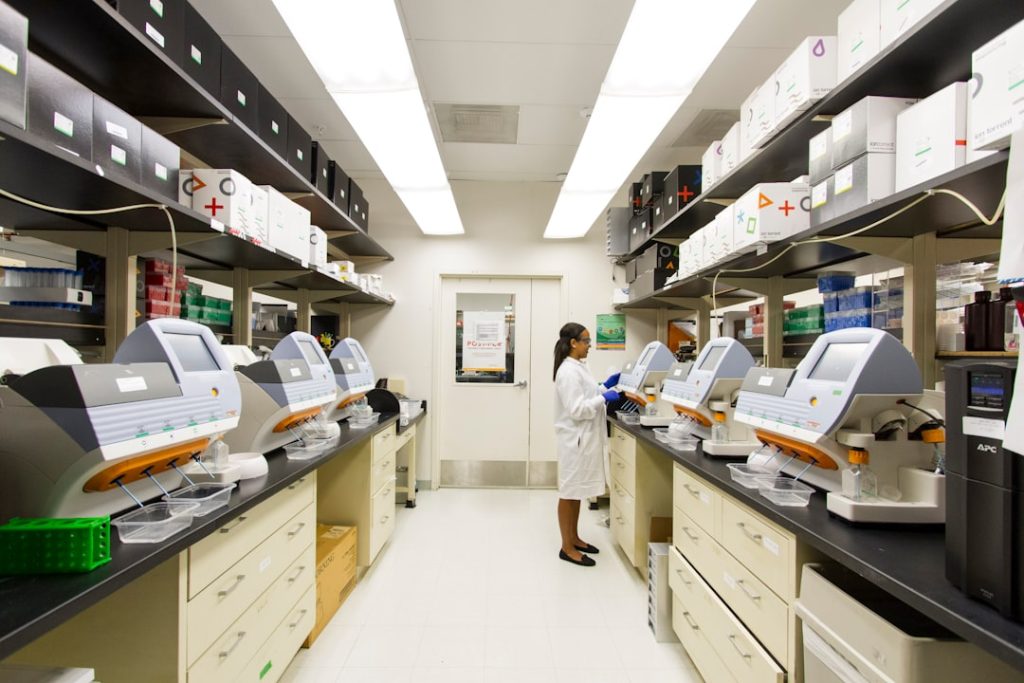
The University of Wisconsin–Madison, in conjunction with its clinical enterprise UW Health, established the Wisconsin Institutes for Medical Research (WIMR) as a central hub for biomedical research. Located in Madison, Wisconsin, WIMR serves as a cornerstone of the UW–Madison Health Sciences campus, facilitating interdisciplinary collaboration aimed at translating fundamental scientific discoveries into new treatments and preventative strategies for human disease.
The conceptualization of WIMR emerged from a recognized need to consolidate and

modernize spaces dedicated to medical research at UW–Madison. Prior to WIMR, research
facilities were geographically dispersed across the campus, hindering spontaneous

interdisciplinary interactions. The vision for WIMR was to create a centralized
biomedical research complex equipped with state-of-the-art infrastructure. This
consolidation aimed not only to optimize resources but also to foster a collaborative
environment where researchers from diverse disciplines — ranging from molecular biology to
population health — could converge. The ultimate goal was to accelerate the pace of
medical innovation, moving discoveries from the laboratory bench to the patient bedside
more efficiently.
Funding and Construction Phases
The construction of WIMR was a multi-phase project, reflecting a significant
investment by the State of Wisconsin, private donors, and federal grants. The initial phase, completed
in 2008, established the first tower, housing core research facilities and laboratories.
Subsequent phases, completed in 2012 and 2014 respectively, added two more towers,
expanding the total research footprint significantly. This phased approach allowed for continuous
growth and adaptation to evolving research needs, while also managing the substantial
financial outlay associated with such a large-scale project. The project was designed with
sustainability principles in mind, aiming for energy efficiency and reduced environmental
impact.
Strategic Location and Integration
WIMR’s location is strategically critical. It is physically connected to the UW
Hospital and Clinics, the American Family Children’s Hospital, and the UW Carbone Cancer
Center. This direct physical link is not merely architectural; it symbolizes the
integrated mission of WIMR. For you, the reader, this means that the journey of a scientific
discovery, from its nascent stage in a WIMR laboratory to its application in a clinical
setting, is dramatically shortened. This proximity facilitates rapid communication and
collaboration between basic scientists, clinical researchers, and practicing physicians,
creating a dynamic feedback loop that enriches both research and patient care.
Research Infrastructure
The design of WIMR prioritizes the creation of flexible, adaptable research spaces that can accommodate the evolving demands of scientific inquiry. The facility is less a collection of isolated labs and more a contiguous research ecosystem.
Core Research Facilities
WIMR houses a comprehensive array of shared core research facilities. These are
centralized resources that provide specialized equipment, technical expertise, and services
to multiple research groups, maximizing efficiency and preventing redundant investments.
Examples include advanced imaging facilities (e.g., MRI, CT, PET), genomics and proteomics
cores, flow cytometry labs, and a vivarium for animal research. These cores act as powerful
magnets, attracting researchers who might otherwise be constrained by the prohibitive cost or
complexity of maintaining such specialized equipment within individual labs. Consider them
as shared tools in a grand workshop; a single, high-precision instrument can serve many
craftsmen, each working on distinct projects but all benefiting from its capabilities. This
approach democratizes access to cutting-edge technology, leveling the playing field for
smaller research groups and fostering a more inclusive research environment.
Specialized Research Centers
Beyond shared cores, WIMR is home to several specialized research centers and
institutes. These centers bring together researchers with common interests, fostering deep
collaborations within specific disease areas or research modalities. Examples include the
UW Carbone Cancer Center, which uses WIMR as a primary research base, the Cardiovascular
Research Center, the Paul P. Carbone Comprehensive Cancer Center, and the Stem Cell and
Regenerative Medicine Center. These centers often transcend traditional departmental
boundaries, drawing faculty from diverse academic units such as oncology, pediatrics,
radiology, and biomedical engineering. This interdisciplinary integration allows for a
holistic approach to complex medical problems, addressing them from multiple angles.
Flexible Laboratory Design
The laboratory spaces within WIMR are designed for flexibility. Movable benches,
modular casework, and easily reconfigurable utilities allow for rapid adaptation to
changing research needs. This design philosophy recognizes the inherent dynamism of
scientific discovery; research pursuits are not static. A lab configured for molecular
genetics today might need to accommodate cell biology experiments next year. This
adaptability minimizes the disruption and cost associated with reconfiguring research
spaces, ensuring that the physical infrastructure remains responsive to the intellectual
currents of scientific progress. For you, the stakeholder, this translates into a more
efficient use of resources and a research environment that can pivot quickly to address
emerging scientific opportunities or public health challenges.
Interdisciplinary Research Programs

WIMR is structured to break down traditional academic silos, actively promoting
research that bridges disciplines. The complexity of many human diseases often defies
simplistic, single-discipline solutions, necessitating a multi-faceted approach.
Cancer Research
Cancer research is a major focus within WIMR, largely driven by the UW Carbone Cancer
Center. Researchers investigate various aspects of cancer, including its molecular
mechanisms, novel diagnostics, therapeutic interventions (e.g., targeted therapies,
immunotherapy), and preventative strategies. Work ranges from fundamental studies of
oncogenes and tumor suppressor genes to preclinical drug development and clinical trials. For
instance, researchers might be exploring new ways to enhance the immune system’s ability to
recognize and destroy cancer cells, or developing imaging techniques that can detect tumors
at earlier, more treatable stages. The close integration with the clinical enterprise ensures
that promising laboratory findings are efficiently translated into potential benefits for
patients.
Cardiovascular Sciences
The Cardiovascular Research Center, utilizing WIMR’s facilities, focuses on
understanding and treating diseases of the heart and blood vessels. This includes research
into atherosclerosis, heart failure, arrhythmias, and hypertension. Investigations span from
basic research into cardiac muscle cell function and vascular biology to the development of
new medical devices and surgical techniques. Teams might be studying genetic predispositions
to heart disease or developing regenerative medicine approaches to repair damaged cardiac
tissue. The ultimate aim is to reduce the burden of cardiovascular disease, a leading cause
of morbidity and mortality globally.
Neuroscience and Neurological Disorders
Research into the brain and spinal cord, including neurological disorders such as
Alzheimer’s disease, Parkinson’s disease, multiple sclerosis, and stroke, also constitutes a significant
area of inquiry within WIMR. Scientists employ a diverse range of techniques, from advanced
neuroimaging and electrophysiology to cellular and molecular neuroscience. This includes
work on understanding disease mechanisms, identifying biomarkers for early diagnosis, and
developing new therapeutic strategies that aim to slow or halt disease progression, or even
restore lost function. The collaborative environment allows neurologists, neurosurgeons,
basic neuroscientists, and imaging specialists to pool their expertise.
Regenerative Medicine and Stem Cell Biology
UW–Madison has a historical connection to stem cell research, and WIMR continues to
be a key site for advancements in regenerative medicine. Researchers investigate the
fundamental biology of embryonic and adult stem cells, their potential for tissue repair and
regeneration, and their application in disease modeling and drug discovery. This field holds
the promise of repairing damaged organs and tissues, offering new hope for conditions
ranging from spinal cord injury to diabetes. Scientists might be developing methods to guide
stem cells to differentiate into specific cell types, or exploring the use of induced
pluripotent stem cells to create patient-specific disease models for drug screening.
Translational Research and Clinical Impact

The core mission of WIMR is to accelerate translational research, bridging the gap
between basic scientific discovery and its application in patient care. This is the
critical junction where the abstract world of molecules and cells confronts the tangible
challenges of human health.
Bench-to-Bedside Acceleration
Translational research at WIMR is intentionally structured to accelerate the journey
from “bench to bedside.” This involves moving discoveries from fundamental laboratory
research through preclinical testing, clinical trials, and ultimately to new therapies and
diagnostics that benefit patients. The co-location of research labs with clinical facilities
at UW Health is a practical manifestation of this principle. When a basic scientist makes a
breakthrough, a clinical researcher or physician is geographically proximate and often
collaboratively involved, creating a direct pathway for exploring its clinical relevance.
This reduces the time lag that can often characterize the translational pipeline in more
dispersed research ecosystems.
Clinical Trials and Patient Engagement
WIMR actively supports a broad portfolio of clinical trials across various disease
areas. These trials are essential for evaluating the safety and efficacy of new drugs,
therapies, and medical devices in human subjects. Clinical trial units within WIMR or
closely affiliated with UW Health facilities facilitate patient participation and data
collection. For you, the potential patient, this means access to cutting-edge treatments that
are still under investigation, offering options where standard therapies may be limited.
Furthermore, patient engagement is actively encouraged, ensuring that research priorities
are aligned with the real-world needs and experiences of individuals affected by disease.
Health Disparities and Population Health
Beyond individual remedies, WIMR researchers also address broader issues of public
health and health disparities. This includes studies on disease prevention, health policy,
and the social determinants of health. Investigations might focus on understanding why certain
communities experience higher rates of specific diseases, or on developing interventions to
promote healthier lifestyles across populations. This work acknowledges that effective
medicine extends beyond the individual patient, encompassing the health and well-being of
entire communities. It is a recognition that the tapestry of health is woven with many
threads, not just those spun from a test tube.
Education and Training
| Metric | Value | Details |
|---|---|---|
| Location | Madison, Wisconsin | Main campus of UW Health and research facilities |
| Research Focus Areas | Biomedical Sciences, Cancer, Neuroscience, Immunology | Key areas of investigation and innovation |
| Annual Research Funding | Over 200 million | Includes federal grants and private funding |
| Number of Research Staff | Approximately 1,000 | Includes scientists, postdocs, and support personnel |
| Published Research Papers (Yearly) | 500+ | Peer-reviewed articles in scientific journals |
| Collaborations | National and International | Partnerships with universities, hospitals, and industry |
| Clinical Trials Conducted | 50+ | Ongoing and completed trials in various medical fields |
WIMR is not only a research facility but also a critical environment for the
training of the next generation of biomedical scientists and healthcare professionals. It
serves as a learning laboratory for students at various career stages.
Graduate and Postdoctoral Training
The institutes provide a robust environment for graduate students and postdoctoral
fellows pursuing advanced degrees and specialized training in biomedical sciences. They
participate in cutting-edge research, learn advanced laboratory techniques, and develop
critical thinking and scientific communication skills. The interdisciplinary nature of WIMR
exposes these trainees to a wide range of scientific perspectives, preparing them for
diverse careers in academia, industry, and government. They are the apprentices in the grand
workshop, learning their craft from seasoned masters.
Medical Student and Resident Involvement
Medical students and residents at UW School of Medicine and Public Health are also
integrated into WIMR’s research activities. This early exposure to research helps foster a
research mindset in future clinicians, encouraging them to think critically about the
underlying mechanisms of disease and to question existing medical practices. It instills an
appreciation for evidence-based medicine and prepares them to contribute to the advancement
of medical knowledge throughout their careers. For you, the future patient, this means your
physician is more likely to be informed by the latest scientific understanding.
Continuing Education and Conferences
WIMR regularly hosts scientific seminars, workshops, and conferences, fostering a
dynamic intellectual environment. Eminent scientists from around the world are invited to
present their work, stimulating discussion and disseminating new knowledge. These events
provide opportunities for continuing education for faculty, trainees, and often the broader
scientific community, ensuring that researchers remain abreast of the latest developments in
their fields. This constant infusion of new ideas and perspectives prevents intellectual
stagnation and acts as a continuous nutrient stream for the research enterprise.
Conclusion
The Wisconsin Institutes for Medical Research represent a significant investment in
biomedical discovery and its translation into improved human health. Through its strategic
design, state-of-the-art infrastructure, and emphasis on interdisciplinary collaboration,
WIMR serves as a vital component of the UW–Madison and UW Health research ecosystem. Its
multifaceted approach, encompassing basic science, translational research, clinical trials,
and educational initiatives, positions it to contribute to the ongoing advancement of
medicine. The facility stands as a testament to the idea that by bringing diverse expertise
under one roof and empowering them with shared resources, the pace of scientific progress
can be significantly accelerated, ultimately benefiting you, the individual, and wider
society.
