
Interactive Response Technology (IRT) has revolutionized the educational landscape, fundamentally altering how educators deliver content and how students engage with learning materials. This technology encompasses a range of tools, including clickers, mobile applications, and online platforms that allow for real-time feedback and interaction during lessons. The integration of IRT into classrooms has not only enhanced the teaching process but has also fostered a more dynamic learning environment.
By facilitating immediate responses from students, educators can gauge understanding and adjust their teaching strategies accordingly, creating a more responsive educational experience. The impact of IRT extends beyond mere engagement; it also promotes inclusivity in the classroom. Traditional methods of assessment often favor students who are more vocal or confident in their responses, potentially sidelining those who may be hesitant to speak up.

IRT levels the playing field by allowing all students to participate anonymously, thus encouraging contributions from a broader range of voices. This democratization of participation can lead to richer discussions and a deeper understanding of the material, as students feel more comfortable sharing their thoughts without the fear of judgment.
Key Takeaways
- Interactive Response Technology (IRT) significantly boosts student engagement and participation in educational settings.
- IRT supports personalized learning by adapting to individual student needs and learning paces.
- Using IRT in classrooms enhances assessment methods, providing immediate feedback and more accurate evaluations.
- Implementing IRT can improve classroom management by fostering interactive and organized learning environments.
- Overcoming challenges in adopting IRT involves addressing technical issues, training educators, and ensuring equitable access.
How Interactive Response Technology Enhances Student Engagement

One of the most significant advantages of Interactive Response Technology is its ability to enhance student engagement. In an era where distractions are abundant, maintaining student interest can be a daunting task for educators. IRT tools, such as polling applications and interactive quizzes, transform passive learning into an active experience.
For instance, during a lecture on environmental science, an instructor might use a polling tool to ask students about their opinions on climate change policies. This immediate interaction not only captures students’ attention but also encourages them to think critically about the subject matter. Moreover, IRT fosters a sense of community within the classroom.
When students respond to questions in real-time, they become part of a collective learning experience. This shared participation can lead to increased motivation as students see their peers engaging with the material. For example, in a history class discussing significant events, an instructor might use IRT to conduct a live quiz that allows students to compete in teams.
This gamification of learning not only makes the content more enjoyable but also reinforces collaboration and teamwork among students.
The Role of Interactive Response Technology in Personalized Learning
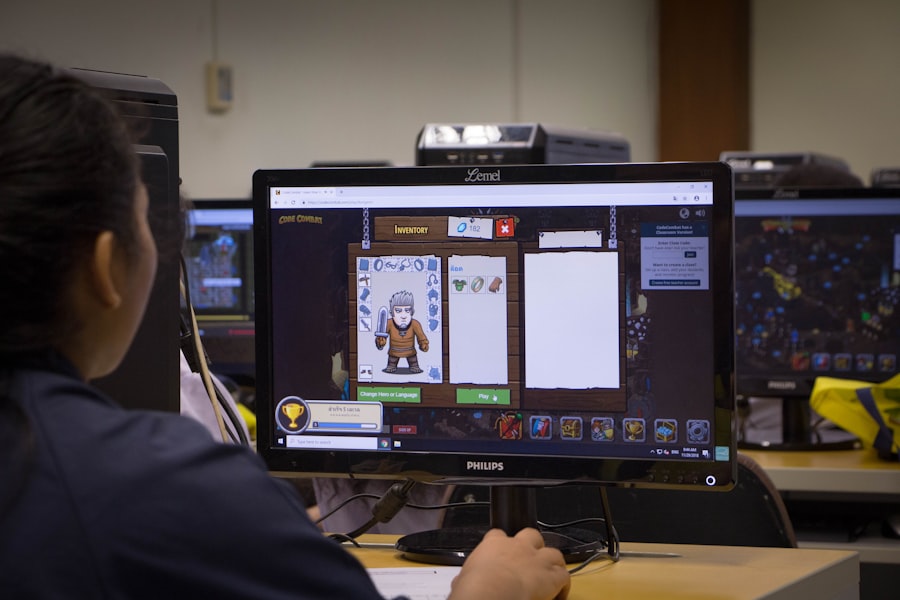
Personalized learning is increasingly recognized as a vital component of effective education, and Interactive Response Technology plays a crucial role in this paradigm shift. By leveraging data collected through IRT tools, educators can tailor their instruction to meet the diverse needs of their students. For instance, if a teacher notices that a significant number of students struggle with a particular concept during a live poll, they can pivot their lesson plan to revisit that topic in greater depth.
This adaptability ensures that no student is left behind and that each learner receives the support they need to succeed. Furthermore, IRT allows for differentiated instruction, enabling educators to provide varied pathways for students based on their individual learning styles and paces. For example, in a mathematics class, an instructor might use IRT to assess students’ understanding of algebraic concepts and then group them according to their proficiency levels.
Advanced learners can be challenged with more complex problems, while those needing additional support can work on foundational skills. This targeted approach not only enhances comprehension but also fosters a sense of ownership over one’s learning journey.
The Benefits of Using Interactive Response Technology in the Classroom
The benefits of incorporating Interactive Response Technology into the classroom are manifold and extend beyond mere engagement and personalization. One notable advantage is the immediate feedback it provides to both students and educators. In traditional settings, assessments often occur at the end of a unit or lesson, leaving little room for real-time adjustments.
With IRT, teachers can instantly assess student understanding through quizzes or polls, allowing them to identify misconceptions and address them on the spot. This timely feedback loop is essential for effective teaching and learning. Additionally, IRT promotes accountability among students.
When they know that their responses will be collected and analyzed in real-time, they are more likely to take their participation seriously. This sense of responsibility can lead to improved attendance and engagement levels. For instance, in a language arts class where students are asked to respond to reading comprehension questions via an interactive platform, they are more likely to come prepared for discussions knowing that their input will directly influence classroom dynamics.
This accountability not only enhances individual performance but also contributes to a more vibrant classroom culture.
Overcoming Challenges in Implementing Interactive Response Technology in Education
| Metric | Description | Typical Value / Range | Importance |
|---|---|---|---|
| System Uptime | Percentage of time the IRT system is operational without failure | 99.9% – 99.99% | High – Ensures continuous availability during clinical trials |
| Response Time | Average time taken for the system to process and respond to a query | Less than 2 seconds | High – Critical for real-time data entry and validation |
| Data Accuracy | Percentage of correctly captured and validated data entries | 99.5% – 100% | High – Ensures reliability of clinical trial data |
| Number of Concurrent Users | Maximum number of users the system can support simultaneously | Up to 500 users | Medium – Important for large multi-site trials |
| Randomization Capability | Ability to assign subjects to treatment groups based on predefined algorithms | Supports simple to complex randomization schemes | High – Essential for unbiased clinical trial design |
| Inventory Management | Tracking and management of drug supply and kits | Real-time tracking with alerts for low stock | High – Prevents drug shortages and ensures compliance |
| Audit Trail | Record of all system activities and data changes | Complete and tamper-proof logs | High – Required for regulatory compliance |
| Integration Capability | Ability to interface with other clinical trial systems (e.g., EDC, CTMS) | Supports standard APIs and data formats | Medium – Facilitates streamlined data flow |
Despite its numerous advantages, the implementation of Interactive Response Technology is not without challenges. One significant hurdle is the technological divide that exists in many educational settings. Not all students have equal access to devices or reliable internet connections, which can hinder participation and engagement when using IRT tools.
Educators must be mindful of these disparities and seek solutions that ensure all students can benefit from interactive technologies. This might involve providing school-owned devices or creating alternative methods for participation that do not rely solely on technology. Another challenge lies in the professional development of educators themselves.
While many teachers recognize the potential of IRT, they may lack the training or confidence to integrate these tools effectively into their teaching practices. Ongoing professional development programs are essential for equipping educators with the skills needed to utilize IRT effectively. Workshops that focus on best practices for using interactive tools can empower teachers to experiment with different approaches and find what works best for their unique classroom environments.
Interactive Response Technology and Assessment: A New Approach to Testing

Interactive Response Technology has ushered in a new era of assessment practices within education. Traditional testing methods often emphasize rote memorization and standardized formats that may not accurately reflect a student’s understanding or abilities. In contrast, IRT allows for formative assessments that provide insights into student learning in real-time.
For example, educators can use interactive quizzes during lessons to assess comprehension continuously rather than relying solely on high-stakes testing at the end of a unit. This shift towards formative assessment encourages a growth mindset among students. When assessments are integrated into daily learning experiences through IRT, students receive ongoing feedback that helps them identify areas for improvement without the pressure associated with traditional exams.
This approach not only reduces anxiety but also fosters resilience as students learn to view assessments as opportunities for growth rather than mere evaluations of their worth.
Interactive Response Technology and Classroom Management
Classroom management is a critical aspect of effective teaching, and Interactive Response Technology can play a pivotal role in enhancing this area as well. By utilizing IRT tools, educators can create structured environments that promote engagement while minimizing disruptions. For instance, during a lesson on scientific principles, an instructor might use an interactive platform to pose questions that require student input at various points throughout the class.
This strategy keeps students focused and attentive while providing clear expectations for participation. Moreover, IRT can help teachers monitor student behavior and engagement levels in real-time. Many interactive platforms offer analytics that allow educators to track participation rates and identify patterns in student responses.
If certain students consistently disengage or struggle with specific topics, teachers can intervene proactively by offering additional support or adjusting their instructional strategies accordingly. This data-driven approach not only enhances classroom management but also fosters a more supportive learning environment where all students feel valued.
The Future of Education: Integrating Interactive Response Technology into the Curriculum
As education continues to evolve in response to technological advancements, the integration of Interactive Response Technology into curricula will likely become increasingly prevalent. The future of education will demand innovative approaches that leverage technology to enhance learning experiences and outcomes. Schools will need to embrace IRT as an essential component of their instructional strategies rather than viewing it as an optional add-on.
In this future landscape, educators will be tasked with designing curricula that seamlessly incorporate interactive technologies across various subjects and grade levels. This could involve developing interdisciplinary projects that utilize IRT tools for collaborative learning experiences or creating hybrid models that blend traditional instruction with digital engagement strategies. As educational institutions adapt to these changes, they will need to prioritize ongoing professional development for teachers to ensure they are equipped with the skills necessary to navigate this new terrain effectively.
The potential for Interactive Response Technology to transform education is immense, offering opportunities for enhanced engagement, personalized learning experiences, and innovative assessment practices. As we look ahead, it is clear that embracing these technologies will be crucial for preparing students for success in an increasingly complex world where adaptability and critical thinking are paramount.
