

Cancer treatment has experienced significant changes over recent decades, primarily due to advances in medical database research. This field involves the systematic collection, analysis, and interpretation of large volumes of medical data to improve cancer understanding and treatment outcomes. The combination of multiple data sources—including clinical records, genomic data, and patient-reported outcomes—has allowed researchers and clinicians to develop more effective and precise therapies.
Given that cancer ranks among the top causes of death globally, there is critical need for innovative research methods that utilize data effectively. Medical database research in cancer treatment enables the identification of new therapeutic targets and supports patient classification based on individual biological characteristics. Through data analytics, researchers can identify patterns and relationships that cancer’s biological complexity previously concealed.

This methodology provides detailed insights into tumor behavior, treatment responses, and potential resistance mechanisms. Continued advancement in cancer research through medical databases positions the field to achieve substantial improvements in patient outcomes and treatment personalization.
Key Takeaways
- Big data and AI are transforming cancer treatment by enabling personalized and more effective therapies.
- Genomic data plays a crucial role in tailoring cancer treatments to individual patients’ genetic profiles.
- Electronic health records and clinical trial databases provide valuable insights for improving cancer research and outcomes.
- Ethical challenges and data privacy concerns must be addressed in database-driven cancer research.
- Future innovations promise enhanced integration of diverse data sources to further advance cancer treatment strategies.
The Role of Big Data in Cancer Treatment Advancements

Big data has emerged as a cornerstone in the evolution of cancer treatment, providing unprecedented opportunities to analyze vast datasets that encompass clinical, genomic, and lifestyle information. The sheer volume of data generated from various sources, including electronic health records (EHRs), genomic sequencing, and imaging studies, has created a rich tapestry of information that can be mined for insights. For instance, large-scale genomic studies have identified specific mutations associated with different cancer types, leading to the development of targeted therapies that can significantly improve patient survival rates.
Moreover, big data analytics enables researchers to conduct population-based studies that reveal trends in cancer incidence, treatment efficacy, and survival outcomes across diverse demographics. By analyzing data from thousands of patients, researchers can identify which treatments are most effective for specific subgroups, thereby optimizing therapeutic strategies. For example, the Cancer Genome Atlas (TCGA) project has generated a wealth of genomic data that has been instrumental in understanding the molecular underpinnings of various cancers.
This initiative exemplifies how big data can drive advancements in cancer treatment by facilitating the discovery of biomarkers that predict treatment response.
How Machine Learning and Artificial Intelligence are Revolutionizing Cancer Treatment
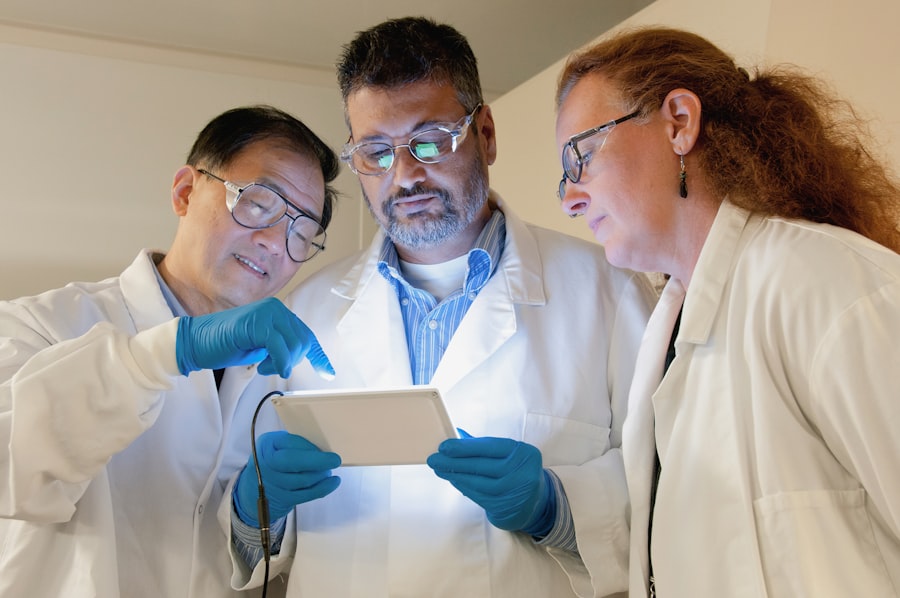
The integration of machine learning (ML) and artificial intelligence (AI) into cancer treatment represents a paradigm shift in how we approach diagnosis and therapy. These technologies enable the analysis of complex datasets at an unprecedented scale and speed, allowing for the identification of patterns that would be impossible for human analysts to discern. For instance, AI algorithms can analyze medical imaging data to detect tumors with remarkable accuracy, often outperforming human radiologists.
This capability not only enhances early detection but also reduces the likelihood of misdiagnosis. Furthermore, machine learning models can predict patient responses to specific treatments based on historical data. By training algorithms on large datasets that include patient demographics, tumor characteristics, and treatment outcomes, researchers can develop predictive models that guide clinical decision-making.
For example, a study published in Nature Medicine demonstrated how an ML model could predict which breast cancer patients would benefit from chemotherapy based on their genomic profiles. Such advancements not only streamline treatment planning but also empower clinicians to make more informed decisions tailored to individual patients.
The Impact of Genomic Data in Personalized Cancer Treatments
Genomic data has revolutionized the field of oncology by enabling personalized cancer treatments that are tailored to the unique genetic makeup of each patient’s tumor. The advent of next-generation sequencing (NGS) technologies has made it feasible to sequence entire genomes quickly and affordably, providing insights into the mutations and alterations driving cancer progression. This wealth of genomic information allows oncologists to identify specific targets for therapy, leading to more effective and less toxic treatment options.
For instance, targeted therapies such as trastuzumab (Herceptin) for HER2-positive breast cancer exemplify how genomic data can inform treatment decisions. By analyzing tumor samples for HER2 gene amplification, clinicians can determine which patients are likely to benefit from this targeted therapy. Additionally, genomic profiling can uncover actionable mutations that may be amenable to novel therapies or clinical trials.
The use of genomic data not only enhances treatment efficacy but also minimizes unnecessary side effects by avoiding ineffective treatments.
Leveraging Electronic Health Records for Cancer Research and Treatment
| Database Name | Type | Number of Records | Coverage | Update Frequency | Primary Use |
|---|---|---|---|---|---|
| PubMed | Bibliographic | 35 million+ | Biomedical literature | Daily | Literature search and review |
| ClinicalTrials.gov | Clinical Trials Registry | 450,000+ | Global clinical trials | Weekly | Trial information and recruitment |
| EMBASE | Bibliographic | 32 million+ | Biomedical and pharmacological literature | Weekly | Drug and medical research |
| Cochrane Library | Systematic Reviews | 10,000+ reviews | Evidence-based medicine | Monthly | Systematic reviews and meta-analyses |
| Gene Expression Omnibus (GEO) | Genomic Data | 3 million+ samples | Gene expression and molecular data | Monthly | Genomic research and analysis |
Electronic health records (EHRs) serve as a vital resource for database medical research in cancer treatment. These digital repositories contain comprehensive patient information, including demographics, medical history, treatment regimens, and outcomes. By leveraging EHRs, researchers can conduct large-scale studies that provide insights into real-world treatment effectiveness and safety profiles.
This data-driven approach allows for a more accurate assessment of how different therapies perform across diverse patient populations. Moreover, EHRs facilitate the identification of potential candidates for clinical trials by providing detailed information about patient eligibility criteria. Researchers can use algorithms to sift through vast amounts of EHR data to identify patients who meet specific inclusion criteria for ongoing trials.
This not only accelerates patient recruitment but also enhances the likelihood of successful trial outcomes by ensuring that participants are well-matched to the study objectives. The integration of EHRs into cancer research underscores the importance of real-world evidence in shaping treatment guidelines and improving patient care.
Utilizing Clinical Trials Data for Improving Cancer Treatment Outcomes

Clinical trials are the gold standard for evaluating new cancer treatments and interventions. The data generated from these trials is invaluable for understanding the efficacy and safety of novel therapies. By systematically collecting and analyzing clinical trial data, researchers can identify which treatments yield the best outcomes for specific patient populations.
This process is critical for refining treatment protocols and establishing evidence-based guidelines that inform clinical practice. Furthermore, the advent of adaptive trial designs has transformed how clinical trials are conducted in oncology. These innovative approaches allow for modifications to trial protocols based on interim results, enabling researchers to make real-time adjustments that enhance trial efficiency and patient safety.
For example, if early results indicate that a particular treatment is ineffective for a subset of patients, researchers can modify the trial to focus on more promising avenues. This flexibility not only accelerates the development of effective therapies but also ensures that patients receive the most appropriate care based on emerging evidence.
Challenges and Ethical Considerations in Database Medical Research for Cancer Treatment
Despite the tremendous potential of database medical research in cancer treatment, several challenges and ethical considerations must be addressed. One significant concern is data privacy and security. The sensitive nature of health information necessitates stringent safeguards to protect patient confidentiality while allowing researchers access to valuable datasets.
Striking a balance between advancing research and safeguarding individual privacy is paramount in maintaining public trust in medical research initiatives. Additionally, there is a risk of bias in data collection and analysis that can impact research outcomes. For instance, if certain demographic groups are underrepresented in clinical trials or databases, the findings may not be generalizable to the broader population.
This lack of diversity can perpetuate health disparities and limit the effectiveness of treatments across different patient groups. Researchers must prioritize inclusivity in study design and ensure that diverse populations are adequately represented in both clinical trials and database research efforts.
Future Prospects and Innovations in Database Medical Research for Cancer Treatment
Looking ahead, the future of database medical research in cancer treatment is poised for remarkable innovations driven by technological advancements and interdisciplinary collaboration. The integration of real-time data analytics with wearable health technology holds promise for continuous monitoring of patients’ health status during treatment. This approach could enable clinicians to make timely adjustments to therapy based on real-world data collected from patients’ daily lives.
Moreover, advancements in bioinformatics and computational biology will further enhance our ability to analyze complex datasets and derive actionable insights from genomic information. As we continue to refine our understanding of cancer biology through database medical research, we can expect the emergence of novel therapeutic strategies that target specific molecular pathways involved in tumor growth and metastasis. In conclusion, as we harness the power of big data, machine learning, genomic profiling, EHRs, and clinical trial data in our quest to combat cancer, we stand on the brink of a new era in oncology where personalized medicine becomes the standard rather than the exception.
The ongoing commitment to ethical research practices and inclusivity will be essential as we navigate this evolving landscape, ensuring that all patients benefit from the advancements made possible through database medical research.
