

Clinical trials are research studies conducted with volunteers to answer specific health questions. They are a critical part of medical research, acting as the bridge between a promising laboratory discovery and a widely available treatment accessible to the public. Without them, new medicines, devices, and procedures could not be proven safe and effective for human use. This article aims to explain the fundamental aspects of clinical trials, providing you with the knowledge to understand their role in advancing healthcare.
Clinical trials serve a singular, vital purpose: to determine if a new medical approach, whether it’s a drug, a therapy, a surgical technique, or a new diagnostic tool, is safe and effective for people. They are not experimentation in the random sense; they are meticulously designed investigations. Think of a clinical trial as a rigorous quality control process for new medical innovations. Before a promising idea can become a trusted tool in your doctor’s arsenal, it must pass through the scrutiny of a clinical trial.
Why Are Clinical Trials Necessary?

The journey of a new medical treatment from the laboratory bench to the patient’s bedside is a long and complex one. Most potential treatments fail to make it through this process. Clinical trials are the gatekeepers, ensuring that only those treatments that demonstrate a net benefit, with acceptable risks, reach the wider population. They are the evidence-based foundation upon which modern medicine is built.
- Establishing Safety: This is often the initial and paramount concern. Researchers must first determine if a new intervention causes harm. Early-phase trials focus heavily on identifying potential side effects, their severity, and how the body processes the intervention.
- Determining Efficacy: Once safety is established, the next crucial question is whether the intervention actually works. This involves comparing the new approach to existing treatments or a placebo (an inactive substance) to see if it produces the desired outcome. This is where the “proof” of effectiveness is gathered.
- Identifying Optimal Dosage and Administration: For drugs and some therapies, finding the right dose is critical. Too little may not be effective, while too much could be harmful. Clinical trials help pinpoint the most effective and safest dosage and how frequently it should be administered.
- Understanding Long-Term Effects: Some effects, positive or negative, may not become apparent immediately. Later-phase trials observe participants over extended periods to identify long-term benefits and potential risks.
- Comparing Different Treatments: Clinical trials can directly compare the effectiveness and safety of different existing treatments or new treatments against standard care. This helps guide healthcare providers and patients in choosing the best course of action.
The Ethical Framework Guiding Clinical Trials
The well-being of participants is at the forefront of all clinical trial design and execution. Ethical principles and strict regulations are in place to protect individuals involved in research. These principles are not mere suggestions; they are binding requirements.
- Informed Consent: This is perhaps the most crucial ethical cornerstone. Before participating in any clinical trial, you have the absolute right to be fully informed about the study. This includes understanding its purpose, procedures, potential risks and benefits, alternatives, and your right to withdraw at any time without penalty. This is not about coercion; it’s about making a fully informed decision.
- Beneficence and Non-Maleficence: These core ethical principles mean that researchers must strive to maximize potential benefits while minimizing potential harm. The potential benefits to the participant and society must outweigh the potential risks.
- Justice: The burdens and benefits of research should be distributed fairly. This means that certain groups should not be unfairly exploited in research, and that the findings of research should be made available to all who could benefit from them.
- Institutional Review Boards (IRBs)/Ethics Committees: These independent committees are comprised of scientists, ethicists, and community members. They review and approve all research involving human subjects before it begins and monitor it throughout its duration to ensure it adheres to ethical standards and regulatory requirements. They act as the guardians of participant rights and safety.
The Stages of a Clinical Trial: A Phased Approach

Clinical trials proceed through distinct phases, each with its specific objectives and patient population. This phased approach allows researchers to systematically gather information about a new intervention, building knowledge step by step. Imagine each phase as a different altitude of a climb; you gain more perspective and understanding as you ascend.
Phase 1: The Initial Exploration
Phase 1 trials are typically the first time an investigational drug or treatment is tested in humans. The primary goal is to assess the safety of the intervention and to discover how the body handles it, including absorption, metabolism, and excretion.
- Small Group of Healthy Volunteers (Usually): These studies often involve a small number (typically 20-80) of healthy volunteers. In some cases, particularly for treatments for serious diseases like cancer, patients with the condition may be included if there are no suitable healthy volunteers or if the intervention is deemed too risky for healthy individuals.
- Focus on Safety and Dosage Range: Researchers are looking for any signs of toxicity and attempting to determine a safe dosage range. They are not primarily focused on whether the treatment works at this stage.
- Pharmacokinetics and Pharmacodynamics: Scientists study how the drug moves through the body (pharmacokinetics) and what effects it has on the body (pharmacodynamics). This provides vital clues for later phases.
Phase 2: Testing for Effectiveness
If Phase 1 trials show that an intervention is reasonably safe, it moves to Phase 2. The main goal here is to see if the intervention works in people who have the specific disease or condition it is intended to treat.
- Larger Group of Patients: These trials involve a larger group of participants (typically 100-300) who have the target disease or condition.
- Assessing Efficacy and Side Effects: Researchers are looking for evidence that the intervention is effective and continuing to monitor for side effects. Often, these trials will compare the intervention to a placebo.
- Determining Optimal Dosing Strategies: Further refinement of the dosage and treatment schedule often occurs in Phase 2.
Phase 3: Confirmation and Comparison
Phase 3 trials are the most extensive and are designed to confirm the effectiveness of an intervention, monitor side effects, compare it to commonly used treatments, and collect information that will allow the intervention to be used safely.
- Large, Diverse Patient Populations: These trials involve hundreds or even thousands of participants across multiple locations. The aim is to ensure the findings are generalizable to a broad range of people with the condition.
- Comparison to Standard Treatments: The intervention is often compared against the current standard treatment or a placebo. This is crucial for determining if the new intervention offers an advantage.
- Gathering Data for Regulatory Approval: The data collected in Phase 3 trials is the primary basis for seeking approval from regulatory agencies like the U.S. Food and Drug Administration (FDA).
Phase 4: Post-Marketing Surveillance
Once an intervention is approved and available to the public, Phase 4 trials, also known as post-marketing studies, continue to monitor its safety and effectiveness in the general population.
- Long-Term Safety and Efficacy: These studies help identify rare or long-term side effects that may not have been apparent in earlier, shorter-term trials.
- Different Populations and Uses: Researchers may also investigate the intervention in different patient groups or for new uses.
- Real-World Effectiveness: Phase 4 trials provide valuable data on how the treatment performs in everyday clinical practice, outside the controlled environment of earlier trials.
Participating in a Clinical Trial: Your Role and Rights
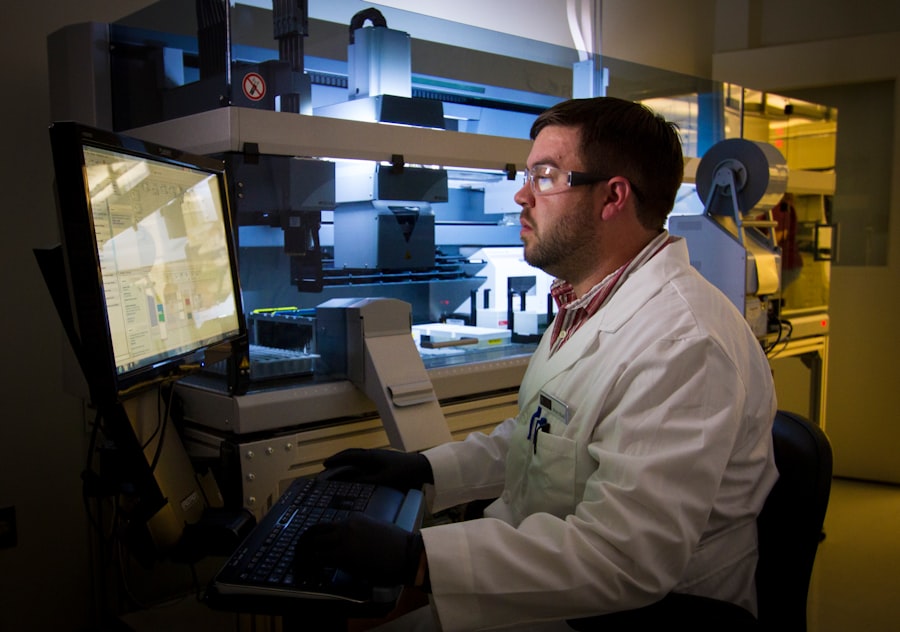
Deciding whether to participate in a clinical trial is a significant personal decision. It is a decision that should be made with ample information and careful consideration.
Understanding the Process of Participation
If you are interested in participating, the journey typically begins with discussions with your healthcare provider.
- Discussing Options with Your Doctor: Your doctor is your first point of contact. They can inform you about relevant clinical trials that are enrolling participants and assess if a trial is appropriate for your specific medical condition.
- Screening and Eligibility: If you decide to explore a trial, you will undergo a screening process to determine if you meet the specific eligibility criteria. These criteria are established to ensure the safety of participants and the scientific validity of the study.
- The Informed Consent Process: As mentioned earlier, this is a critical step. You will be given detailed information about the trial, and researchers will answer all your questions. It is essential that you understand everything before agreeing to participate. Do not hesitate to ask for clarification or to take time to consider your decision.
- Study Visits and Procedures: If you enroll, you will attend scheduled study visits. These visits may involve physical examinations, blood tests, imaging scans, questionnaires, and receiving the investigational intervention. The frequency and nature of these visits depend on the specific trial.
Your Rights as a Participant
Your rights are paramount throughout the entire clinical trial process. Researchers have a legal and ethical obligation to protect them.
- The Right to Ask Questions: You have the right to ask questions at any point, before, during, or after the trial. This includes questions about the study protocol, potential risks and benefits, your health status, and the results of the study as they pertain to you.
- The Right to Withdraw: You can choose to leave a clinical trial at any time, for any reason, without it affecting your standard medical care. This decision will not be met with pressure or punishment.
- Confidentiality and Privacy: All information collected about you during a clinical trial is kept confidential and protected according to privacy laws. Your personal health information will not be shared without your explicit consent, except as required by law.
- Access to Medical Records: You have the right to access your medical records related to the clinical trial.
Types of Clinical Trials: Beyond the Basics

While the phased approach is a common structure, clinical trials can be categorized in various ways, reflecting the diversity of medical research.
Interventional vs. Observational Studies
This is a fundamental distinction in clinical research.
- Interventional Clinical Trials: As discussed extensively above, these trials involve researchers actively intervening by administering a treatment, drug, procedure, or other therapy to participants. The goal is to determine the effects of this intervention.
- Observational Studies: In these studies, researchers observe participants and collect information about their health without intervening or assigning any treatments. Examples include following groups of people to see who develops a particular disease over time or comparing the health outcomes of people who have had different lifestyle choices.
Different Study Designs
Within interventional trials, various designs are employed to answer specific research questions.
- Randomized Controlled Trials (RCTs): This is considered the gold standard for evaluating the effectiveness of new interventions. Participants are randomly assigned to receive either the investigational intervention or a control (e.g., a placebo or standard treatment). Randomization helps ensure that the groups are as similar as possible at the start of the study, minimizing bias.
- Blinding: In some RCTs, either the participants (single-blind), the researchers/clinicians (double-blind), or both (triple-blind) do not know which treatment a participant is receiving. This prevents expectations from influencing the results.
- Single-Arm Trials: In these trials, all participants receive the investigational intervention. There is no separate control group. These are often used in early-phase trials or when a control group is not ethically feasible or practical.
- Crossover Trials: Participants receive different interventions (e.g., the investigational treatment and the control) in a sequential order. This allows each participant to serve as their own control, potentially requiring fewer participants.
Areas of Clinical Trial Research
Clinical trials span the entire spectrum of medical disciplines.
- Drug Trials: These are the most common type, evaluating new medications.
- Surgical Trials: Investigating the safety and effectiveness of new surgical techniques or devices.
- Behavioral Trials: Evaluating interventions that aim to change behaviors, such as smoking cessation programs or dietary changes.
- Device Trials: Testing the safety and efficacy of medical devices, like pacemakers, artificial joints, or glucose monitors.
- Diagnostic Trials: Developing and testing new methods for detecting diseases.
- Prevention Trials: Investigating ways to prevent diseases in people who have not yet developed them, or to prevent recurrence in those who have had them.
The Future of Clinical Trials: Innovation and Evolution
| Metric | Description | Example/Value |
|---|---|---|
| Definition | A research study conducted with human participants to evaluate medical, surgical, or behavioral interventions. | Testing a new drug for efficacy and safety |
| Phases | Stages of clinical trials to assess safety, dosage, efficacy, and side effects. | Phase 1, Phase 2, Phase 3, Phase 4 |
| Participants | Number of people enrolled in a clinical trial. | Ranges from 20 (Phase 1) to thousands (Phase 3) |
| Duration | Length of time a clinical trial typically lasts. | Several months to several years |
| Primary Outcome | Main result measured to determine the effect of the intervention. | Reduction in symptoms, survival rate, etc. |
| Randomization | Process of randomly assigning participants to different groups to reduce bias. | Yes/No (most trials use randomization) |
| Control Group | Group that receives standard treatment or placebo for comparison. | Placebo or standard care |
| Informed Consent | Process ensuring participants understand the trial and agree voluntarily. | Required for all participants |
The landscape of clinical trials is continually evolving, driven by technological advancements and a growing understanding of disease.
Technological Advancements Shaping Trials
Technology is transforming how clinical trials are conducted, making them more efficient, accessible, and patient-centric.
- Digital Health and Wearable Devices: These tools allow for continuous data collection from participants remotely, offering a more comprehensive and real-time understanding of their responses to treatment. This can reduce the need for frequent in-person visits and provide richer datasets.
- Big Data and Artificial Intelligence (AI): AI is being used to analyze vast amounts of data from clinical trials and electronic health records. This can help identify potential trial participants more effectively, accelerate data analysis, identify patterns in disease progression, and even predict treatment outcomes. AI can act as a powerful magnifying glass, revealing insights hidden within the data.
- Genomics and Precision Medicine: Advances in genetic sequencing are enabling the development of trials that target treatments to specific genetic profiles of diseases (precision medicine). This means therapies are tailored to the individual, potentially leading to more effective treatments with fewer side effects.
Patient-Centric Approaches
There is a growing emphasis on making clinical trials more accessible and accommodating for participants.
- Decentralized Clinical Trials (DCTs): DCTs aim to bring the trial to the patient, rather than requiring patients to travel to a central research site. This can involve remote consultations, home health visits, and electronic delivery of study interventions. This can significantly reduce the burden on participants, especially those with mobility issues or who live far from research centers.
- Patient Engagement in Trial Design: Increasingly, patients are being involved in the design of clinical trials, ensuring that the research priorities and outcome measures are relevant and meaningful to them. Their lived experience offers invaluable perspective.
Challenges and Opportunities
Despite the progress, challenges remain in the clinical trial ecosystem.
- Recruitment and Retention: Finding and keeping participants in trials can be difficult. Addressing these challenges is crucial for the timely completion of research.
- Cost and Complexity: Running clinical trials is expensive and complex, posing a barrier to the development of new treatments, particularly for rare diseases.
- Data Sharing and Transparency: Encouraging greater transparency and sharing of clinical trial data can accelerate scientific discovery and prevent duplication of research efforts.
In conclusion, understanding clinical trials is essential for anyone navigating the healthcare system or considering their options for treatment. They are the rigorous process by which medical advancements are validated, ensuring that the treatments we rely on are both safe and effective. By demystifying their purpose, phases, and the rights of participants, this article aims to empower you with the knowledge to engage with this critical aspect of medical progress.
