

In vitro diagnostics (IVD) play a pivotal role in modern medicine, providing essential information that aids in the diagnosis, monitoring, and management of diseases. IVDs encompass a wide range of tests, including those for infectious diseases, genetic disorders, and chronic conditions. The clinical trials that evaluate these diagnostic tools are crucial for ensuring their safety, efficacy, and reliability before they reach the market.
These trials are designed to assess how well a diagnostic test performs in real-world settings, often involving diverse patient populations and various clinical scenarios. The importance of IVD clinical trials cannot be overstated, as they not only validate the performance of diagnostic tests but also help to establish guidelines for their appropriate use in clinical practice. The landscape of IVD clinical trials is continually evolving, driven by advancements in technology, regulatory changes, and the increasing demand for personalized medicine.

As healthcare becomes more data-driven and patient-centric, the methodologies employed in IVD clinical trials are adapting to meet these new challenges. This article delves into the current challenges faced in IVD clinical trials, explores innovations in diagnostic technology, examines regulatory considerations, and highlights the role of big data and personalized medicine in shaping the future of diagnostic innovation.
Key Takeaways
- IVD clinical trials are essential for validating diagnostic devices and ensuring their safety and efficacy.
- Current challenges include regulatory complexities, patient recruitment, and data variability.
- Innovations in diagnostic technology, such as advanced biomarkers and digital tools, are transforming IVD trials.
- Big data and personalized medicine are increasingly integral to designing and interpreting IVD clinical trials.
- Emerging trends point toward more adaptive, efficient, and patient-centric approaches in future IVD clinical research.
Current Challenges in IVD Clinical Trials

One of the most significant challenges in IVD clinical trials is the complexity of designing studies that accurately reflect real-world clinical settings. Unlike traditional drug trials, which often have well-defined endpoints and patient populations, IVD trials must account for a multitude of variables that can affect test performance. For instance, factors such as sample collection methods, storage conditions, and patient demographics can all influence the accuracy and reliability of diagnostic results.
This complexity necessitates a robust study design that can accommodate these variables while still providing clear evidence of a test’s efficacy. Moreover, recruitment for IVD clinical trials can be particularly challenging. Many diagnostic tests are intended for use in specific patient populations, which can limit the pool of eligible participants.
Additionally, patients may be hesitant to participate in trials due to concerns about the implications of testing or the potential for false results. This reluctance can lead to delays in trial enrollment and ultimately prolong the time it takes for new diagnostic tests to reach the market. Addressing these recruitment challenges requires innovative strategies that engage patients and healthcare providers while ensuring that trial designs remain scientifically rigorous.
Innovations in Diagnostic Technology
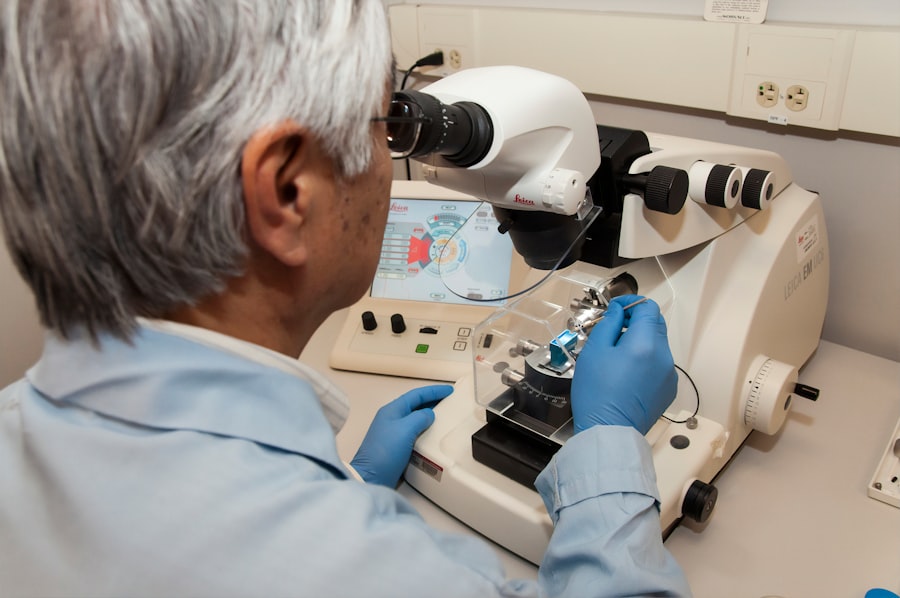
The field of diagnostic technology is witnessing rapid advancements that are transforming the landscape of IVD clinical trials. One notable innovation is the development of point-of-care (POC) testing devices, which allow for rapid diagnosis at or near the site of patient care. These devices are particularly valuable in emergency settings or remote locations where access to laboratory facilities may be limited.
The ability to obtain immediate results can significantly impact patient management and treatment decisions, making POC testing an area of intense research and development. Another significant advancement is the integration of molecular diagnostics into routine clinical practice. Techniques such as next-generation sequencing (NGS) and polymerase chain reaction (PCR) have revolutionized the detection of genetic mutations and infectious agents.
These technologies enable more precise and sensitive testing compared to traditional methods, allowing for earlier detection of diseases and more tailored treatment approaches. As these innovations continue to evolve, they present both opportunities and challenges for IVD clinical trials, necessitating new methodologies to evaluate their performance effectively.
Regulatory Considerations for IVD Clinical Trials
Navigating the regulatory landscape is a critical aspect of conducting IVD clinical trials. Regulatory bodies such as the U.S. Food and Drug Administration (FDA) and the European Medicines Agency (EMA) have established guidelines that govern the approval process for diagnostic tests.
These regulations are designed to ensure that IVDs meet stringent safety and efficacy standards before they can be marketed to healthcare providers and patients. However, the evolving nature of diagnostic technology often outpaces existing regulatory frameworks, leading to uncertainty for manufacturers and researchers alike. One key regulatory consideration is the classification of IVDs based on their risk profiles.
The FDA categorizes IVDs into three classes: Class I (low risk), Class II (moderate risk), and Class III (high risk). Each class has different requirements for premarket submission and clinical evidence. For instance, Class III devices typically require extensive clinical trials to demonstrate safety and effectiveness, while Class I devices may only need general controls.
This classification system can complicate trial design, as manufacturers must carefully consider which regulatory pathway best aligns with their product’s intended use and risk level.
The Role of Big Data in IVD Clinical Trials
| Metric | Description | Value | Unit |
|---|---|---|---|
| Number of Active IVD Clinical Trials | Total ongoing clinical trials for in vitro diagnostic devices | 1,250 | Trials |
| Average Trial Duration | Mean length of clinical trials from start to completion | 18 | Months |
| Enrollment Size | Average number of participants enrolled per trial | 350 | Participants |
| Trial Phases Distribution | Percentage of trials in each clinical phase | Phase I: 15%, Phase II: 40%, Phase III: 35%, Phase IV: 10% | Percentage |
| Top Indications | Most common medical conditions targeted by IVD trials | Infectious Diseases, Oncology, Cardiovascular, Diabetes | Categories |
| Geographic Distribution | Regions with highest number of IVD clinical trials | North America (45%), Europe (30%), Asia-Pacific (20%), Others (5%) | Percentage |
| Regulatory Approvals | Percentage of trials leading to regulatory approval | 65 | Percentage |
The advent of big data has introduced new possibilities for enhancing the efficiency and effectiveness of IVD clinical trials. With vast amounts of health-related data being generated from electronic health records (EHRs), genomic databases, and wearable devices, researchers can leverage this information to gain insights into patient populations and disease patterns. By analyzing large datasets, trial designers can identify trends that inform study design, such as optimal patient recruitment strategies or potential confounding factors that may affect test performance.
Furthermore, big data analytics can facilitate real-time monitoring of trial outcomes, allowing researchers to make data-driven decisions throughout the study process. For example, machine learning algorithms can be employed to predict patient responses to specific diagnostic tests based on historical data, enabling more personalized approaches to trial design. This integration of big data not only enhances the robustness of clinical trials but also accelerates the timeline for bringing new diagnostic tests to market.
Personalized Medicine and IVD Clinical Trials

The rise of personalized medicine has profound implications for IVD clinical trials, as it emphasizes tailoring medical treatment to individual characteristics rather than adopting a one-size-fits-all approach. In this context, IVDs play a crucial role by providing essential information about a patient’s unique genetic makeup or disease profile. For instance, companion diagnostics are tests designed to identify patients who are most likely to benefit from a specific therapeutic intervention based on their genetic or molecular characteristics.
As personalized medicine continues to gain traction, IVD clinical trials must adapt to accommodate this shift. Trial designs may need to incorporate stratification based on genetic markers or other biomarkers that predict treatment response. This approach not only enhances the relevance of trial outcomes but also aligns with regulatory expectations for demonstrating the clinical utility of diagnostic tests in guiding treatment decisions.
The integration of personalized medicine into IVD trials represents a significant advancement in how diagnostics are developed and utilized in clinical practice.
Emerging Trends in IVD Clinical Trials
Several emerging trends are shaping the future of IVD clinical trials as the field continues to evolve. One notable trend is the increasing emphasis on real-world evidence (RWE) in evaluating diagnostic tests. Regulatory agencies are beginning to recognize the value of RWE in complementing traditional clinical trial data, particularly for IVDs that may be used in diverse patient populations or settings.
By incorporating RWE into trial designs, researchers can provide a more comprehensive understanding of how diagnostic tests perform outside controlled environments. Another trend is the growing focus on digital health technologies and their integration into IVD clinical trials. Mobile health applications and telemedicine platforms are becoming increasingly prevalent, allowing for remote patient monitoring and data collection during trials.
This shift not only enhances patient engagement but also facilitates more efficient data gathering processes. As digital health technologies continue to advance, they will likely play an integral role in shaping how IVD clinical trials are conducted in the future.
The Future of Diagnostic Innovation
The future of diagnostic innovation is poised for significant transformation as advancements in technology, regulatory frameworks, and personalized medicine converge within the realm of IVD clinical trials. As researchers navigate current challenges and embrace emerging trends, they will be better equipped to develop diagnostic tests that meet the evolving needs of healthcare providers and patients alike. The integration of big data analytics, real-world evidence, and digital health technologies will further enhance the efficiency and effectiveness of these trials.
As we look ahead, it is clear that the landscape of IVD clinical trials will continue to evolve rapidly. The ongoing commitment to innovation will drive improvements in diagnostic accuracy and patient outcomes while ensuring that new tests are rigorously evaluated for safety and efficacy. Ultimately, this dynamic environment will foster a new era of diagnostic capabilities that empower healthcare professionals with timely and actionable information for improved patient care.
