
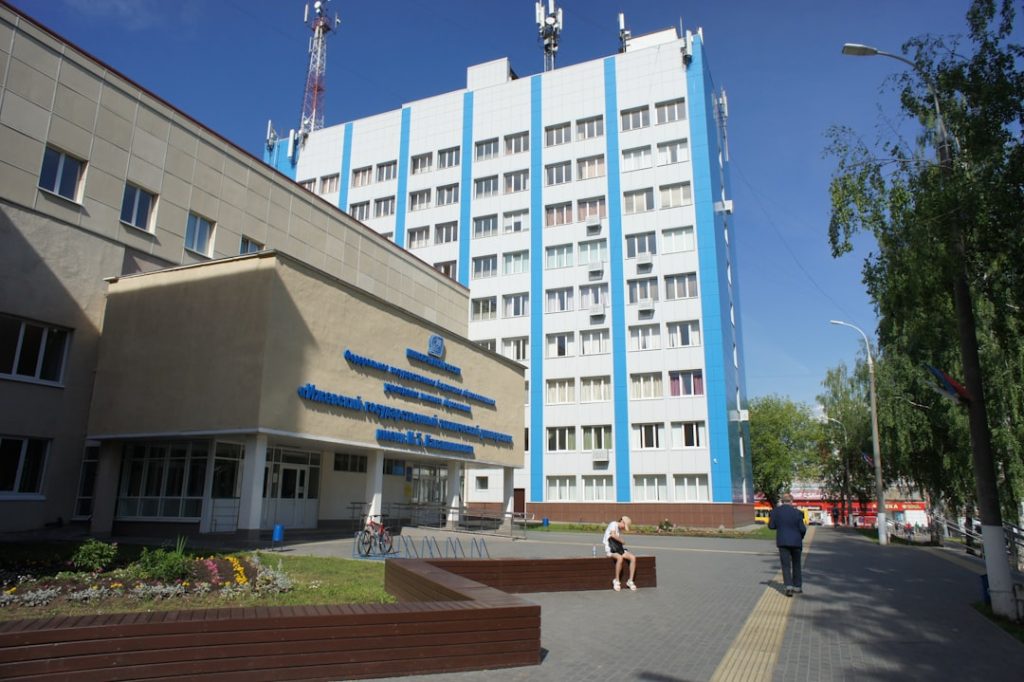
The Stowers Institute for Medical Research is a biomedical research facility located in Kansas City, Missouri, established in 2000 by philanthropists Jim and Virginia Stowers. The institute conducts fundamental biological research with the objective of advancing understanding of human health and disease mechanisms. The institute’s research mission centers on translating basic scientific discoveries into applications for human health.
Its approach emphasizes investigating the underlying biological mechanisms of diseases to inform the development of therapeutic interventions. The facility supports interdisciplinary research collaboration among scientists from various fields. The Stowers Institute’s research programs cover multiple areas of biomedical science, including cancer biology, stem cell biology, genetics, neurodegenerative diseases, and regenerative medicine.

The institute focuses on fundamental research questions aimed at identifying biological principles that regulate health and disease processes, with the goal of contributing to the development of new therapeutic approaches.
Key Takeaways
- Stowers Medical Research Institute is at the forefront of biomedical research with a focus on understanding complex diseases.
- Significant breakthroughs have been made in cancer research, offering new hope for treatment.
- Advances in stem cell therapy are paving the way for innovative regenerative medicine approaches.
- The institute has uncovered critical genetic factors underlying various diseases, enhancing diagnostic and therapeutic strategies.
- Collaborative efforts and novel drug development techniques are driving future medical innovations and improved patient outcomes.
Breakthrough in Cancer Research

Cancer research at the Stowers Institute has yielded significant breakthroughs that have the potential to reshape our understanding of tumor biology and treatment modalities. One notable area of focus is the study of cancer stem cells, which are believed to play a critical role in tumor initiation, progression, and recurrence. Researchers at Stowers have employed advanced techniques such as single-cell RNA sequencing to dissect the heterogeneity within tumors, identifying distinct subpopulations of cancer cells that exhibit varying degrees of aggressiveness and treatment resistance.
This level of granularity in understanding tumor composition is essential for developing targeted therapies that can effectively eliminate these resilient cancer stem cells. In addition to studying cancer stem cells, the Stowers Institute has made strides in elucidating the molecular pathways that drive cancer progression. For instance, researchers have identified key signaling pathways that are frequently dysregulated in various cancers, including the PI3K-AKT-mTOR pathway.
By targeting these pathways with novel small molecules or biologics, scientists at Stowers are exploring new avenues for therapeutic intervention. The integration of cutting-edge technologies such as CRISPR gene editing further enhances their ability to manipulate specific genes involved in cancer, providing insights into potential vulnerabilities that can be exploited for treatment.
Advancements in Stem Cell Therapy
Stem cell therapy represents one of the most promising frontiers in modern medicine, and the Stowers Institute is at the forefront of this rapidly evolving field. Researchers are investigating various types of stem cells, including embryonic stem cells and induced pluripotent stem cells (iPSCs), to understand their unique properties and potential applications in regenerative medicine. One significant advancement has been the development of protocols for differentiating iPSCs into specific cell types, such as neurons or cardiomyocytes, which can be used for disease modeling and drug screening.
The application of stem cell therapy extends beyond basic research; it holds immense potential for treating a variety of degenerative diseases. For example, researchers at Stowers are exploring how stem cells can be utilized to repair damaged tissues in conditions such as heart disease or spinal cord injuries. By harnessing the regenerative capabilities of stem cells, scientists aim to develop therapies that not only alleviate symptoms but also promote healing at a cellular level.
The ongoing work at Stowers exemplifies how advancements in stem cell technology can lead to transformative treatments that address unmet medical needs.
Uncovering the Genetic Basis of Disease
Understanding the genetic underpinnings of diseases is crucial for developing targeted therapies and personalized medicine approaches. The Stowers Institute has made significant contributions to this field through its comprehensive genetic studies aimed at identifying mutations and variations associated with various conditions. Utilizing high-throughput sequencing technologies, researchers are able to analyze large datasets to pinpoint genetic alterations that may contribute to disease susceptibility or progression.
One area of particular interest is the study of hereditary cancers, where researchers investigate specific gene mutations that increase an individual’s risk of developing certain types of cancer. For instance, mutations in BRCA1 and BRCA2 genes are well-known for their association with breast and ovarian cancers. By elucidating these genetic factors, scientists at Stowers are not only enhancing our understanding of cancer biology but also informing clinical practices related to genetic testing and risk assessment.
This knowledge empowers patients with information about their genetic predispositions and enables healthcare providers to tailor prevention strategies accordingly.
Revolutionary Findings in Neurodegenerative Disorders
| Metric | Value |
|---|---|
| Founded | 1994 |
| Location | Kansas City, Missouri, USA |
| Research Focus | Biomedical research, genetics, molecular biology |
| Number of Scientists | Over 300 |
| Annual Research Funding | Approximately 50 million |
| Publications per Year | Over 200 |
| Collaborations | Multiple universities and research institutions worldwide |
Neurodegenerative disorders such as Alzheimer’s disease and Parkinson’s disease pose significant challenges to public health due to their complex etiology and progressive nature. Researchers at the Stowers Institute are actively investigating the molecular mechanisms underlying these conditions, with a focus on identifying potential therapeutic targets. One revolutionary finding has been the role of protein aggregation in neurodegeneration; misfolded proteins can accumulate within neurons, leading to cellular dysfunction and death.
By employing advanced imaging techniques and animal models, scientists at Stowers have been able to visualize these pathological changes in real-time. This research not only enhances our understanding of disease progression but also opens up new avenues for therapeutic intervention. For example, targeting specific pathways involved in protein clearance or enhancing cellular resilience may offer promising strategies for slowing down or even reversing neurodegenerative processes.
The insights gained from this research have far-reaching implications for developing effective treatments that could improve the quality of life for millions affected by these debilitating disorders.
Progress in Regenerative Medicine

Regenerative medicine aims to restore or replace damaged tissues and organs through innovative approaches such as tissue engineering and cellular therapies. The Stowers Institute has made remarkable progress in this field by exploring various strategies to promote tissue regeneration. One notable area of research involves the use of biomaterials to create scaffolds that support cell growth and tissue formation.
These scaffolds can be designed to mimic the natural extracellular matrix, providing a conducive environment for cells to proliferate and differentiate. In addition to biomaterials, researchers at Stowers are investigating the potential of gene editing technologies like CRISPR-Cas9 to enhance regenerative processes. By precisely modifying genes associated with tissue repair or regeneration, scientists aim to boost the body’s innate healing capabilities.
For instance, studies have shown that manipulating specific signaling pathways can enhance muscle regeneration following injury. The integration of these cutting-edge techniques into regenerative medicine holds promise for developing therapies that can effectively treat conditions ranging from traumatic injuries to age-related degenerative diseases.
Innovations in Drug Development
The drug development process is notoriously lengthy and fraught with challenges; however, researchers at the Stowers Institute are pioneering innovative approaches to streamline this process and improve success rates. One significant advancement has been the application of high-throughput screening methods to identify potential drug candidates more efficiently. By testing thousands of compounds against specific biological targets simultaneously, researchers can rapidly assess their efficacy and select promising candidates for further development.
Moreover, the integration of computational modeling and artificial intelligence into drug discovery is revolutionizing how researchers approach therapeutic development. By leveraging machine learning algorithms, scientists can predict how different compounds will interact with biological targets based on existing data. This predictive capability not only accelerates the identification of viable drug candidates but also reduces costs associated with traditional trial-and-error methods.
The innovations emerging from Stowers’ drug development initiatives exemplify how technology can enhance our ability to bring new therapies to market more effectively.
Future Implications and Collaborations
As the Stowers Medical Research Institute continues to push the boundaries of scientific knowledge, its future implications for healthcare are profound. The institute’s commitment to collaboration with academic institutions, industry partners, and healthcare organizations amplifies its impact on biomedical research. By fostering partnerships that bridge basic science with clinical applications, Stowers is well-positioned to translate its discoveries into real-world solutions for patients.
Looking ahead, the potential for collaborative initiatives is vast. For instance, partnerships with pharmaceutical companies could facilitate the rapid translation of laboratory findings into clinical trials, expediting the development of novel therapies. Additionally, collaborations with other research institutions may enhance data sharing and resource pooling, driving innovation across multiple disciplines.
As Stowers continues to forge these connections, its role as a leader in biomedical research will undoubtedly expand, contributing significantly to advancements in human health and disease management for years to come.
