

Clinical trials are a cornerstone of modern medical research, serving as the primary method for evaluating the safety and efficacy of new treatments, drugs, and medical devices. These trials are meticulously designed studies that involve human participants and are essential for advancing medical knowledge and improving patient care. The process of clinical trials is not only a rigorous scientific endeavor but also a complex interplay of ethical considerations, regulatory requirements, and logistical challenges.
The ultimate goal is to ensure that new interventions are both safe for human use and effective in treating specific health conditions. The significance of clinical trials extends beyond the immediate outcomes of the studies themselves. They play a crucial role in the development of evidence-based medicine, where treatment decisions are guided by the best available research.

By systematically testing hypotheses in controlled environments, clinical trials contribute to the body of knowledge that informs clinical practice, public health policies, and healthcare regulations. As such, understanding the various phases and components of clinical trials is essential for anyone involved in healthcare, from researchers and clinicians to patients and policymakers.
Key Takeaways
- Clinical trials progress through phases I to III, focusing on safety, efficacy, and large-scale testing.
- Preclinical research is essential for initial drug development before human trials.
- Regulatory approval follows successful trials, with ongoing post-market surveillance to monitor safety.
- Ethical considerations and challenges are critical throughout the clinical trial process.
- Future medical research aims to improve trial design and incorporate innovative technologies.
Preclinical Research and Development

Before a new drug or treatment can enter clinical trials, it undergoes extensive preclinical research and development. This phase typically involves laboratory experiments and animal studies designed to gather preliminary data on the safety and biological activity of the candidate treatment. Researchers assess pharmacokinetics—how the drug is absorbed, distributed, metabolized, and excreted by the body—as well as pharmacodynamics, which examines the drug’s effects on biological systems.
These studies are critical for identifying potential toxicities and determining appropriate dosages for subsequent human trials. Preclinical research is not merely a formality; it serves as a vital foundation for clinical trial design. For instance, if a new cancer drug shows promise in shrinking tumors in animal models, researchers will analyze the mechanisms behind this effect to inform dosing strategies in humans.
Additionally, preclinical studies help identify biomarkers that can be used to monitor treatment response in clinical trials. The transition from preclinical to clinical research is marked by the submission of an Investigational New Drug (IND) application to regulatory authorities, such as the U.S. Food and Drug Administration (FDA), which must be approved before human testing can commence.
Phase I Clinical Trials: Safety and Dosage

Phase I clinical trials represent the first step in testing a new treatment in humans. These trials primarily focus on assessing the safety of a drug or intervention, determining how it is metabolized in the body, and establishing a safe dosage range. Typically involving a small group of healthy volunteers or patients with specific conditions, Phase I trials are designed to identify any adverse effects that may arise from the treatment.
Researchers closely monitor participants for side effects, which can range from mild discomfort to severe reactions. One notable example of a Phase I trial is the testing of monoclonal antibodies for cancer treatment. In these studies, researchers may start with very low doses of the antibody to evaluate its safety profile before gradually increasing the dosage.
This dose-escalation approach allows scientists to pinpoint the maximum tolerated dose (MTD) while minimizing risks to participants. The data collected during Phase I trials not only informs subsequent phases but also provides critical insights into how different populations may respond to the treatment based on factors such as age, sex, and underlying health conditions.
Phase II Clinical Trials: Efficacy and Side Effects
Once a treatment has demonstrated an acceptable safety profile in Phase I trials, it progresses to Phase II trials, which focus on evaluating its efficacy and further assessing its safety. These trials typically involve a larger group of participants—often ranging from 100 to 300 individuals—who have the condition that the treatment aims to address. The primary objective during this phase is to determine whether the treatment produces a beneficial effect on the disease or condition being studied.
In Phase II trials, researchers often employ randomized controlled designs to compare the new treatment against a placebo or standard therapy. For instance, in testing a new antidepressant, participants may be randomly assigned to receive either the experimental drug or an existing treatment known to be effective. This design helps isolate the effects of the new drug from other variables that could influence outcomes.
Additionally, Phase II trials provide valuable information about side effects that may not have been evident in earlier phases, allowing researchers to refine their understanding of the treatment’s risk-benefit profile.
Phase III Clinical Trials: Large-Scale Testing
| Phase | Purpose | Number of Participants | Duration | Key Focus | Success Rate |
|---|---|---|---|---|---|
| Phase 1 | Assess safety, dosage, and side effects | 20-100 healthy volunteers or patients | Several months | Safety and dosage | Approximately 70% |
| Phase 2 | Evaluate efficacy and side effects | 100-300 patients | Several months to 2 years | Efficacy and side effects | Approximately 33% |
| Phase 3 | Confirm effectiveness, monitor adverse reactions | 1,000-3,000 patients | 1-4 years | Effectiveness and safety | Approximately 25-30% |
| Phase 4 | Post-marketing surveillance to detect long-term effects | Various, often thousands | Ongoing after approval | Long-term safety and effectiveness | Varies |
Phase III clinical trials are pivotal in the drug development process as they involve large-scale testing across diverse populations to confirm efficacy and monitor adverse reactions in a more extensive cohort. These trials typically enroll thousands of participants and are often conducted at multiple sites, including hospitals and clinics worldwide. The primary aim is to provide definitive evidence regarding the treatment’s effectiveness compared to existing therapies or placebos.
A prominent example of a Phase III trial is the clinical evaluation of vaccines during outbreaks of infectious diseases. For instance, during the development of COVID-19 vaccines, large-scale Phase III trials were conducted involving tens of thousands of participants across various demographics. These trials not only assessed how well the vaccine prevented infection but also monitored for any rare side effects that might emerge only when administered to larger populations.
The results from Phase III trials are crucial for regulatory approval and ultimately determine whether a treatment can be made available to the public.
Regulatory Approval and Post-Market Surveillance
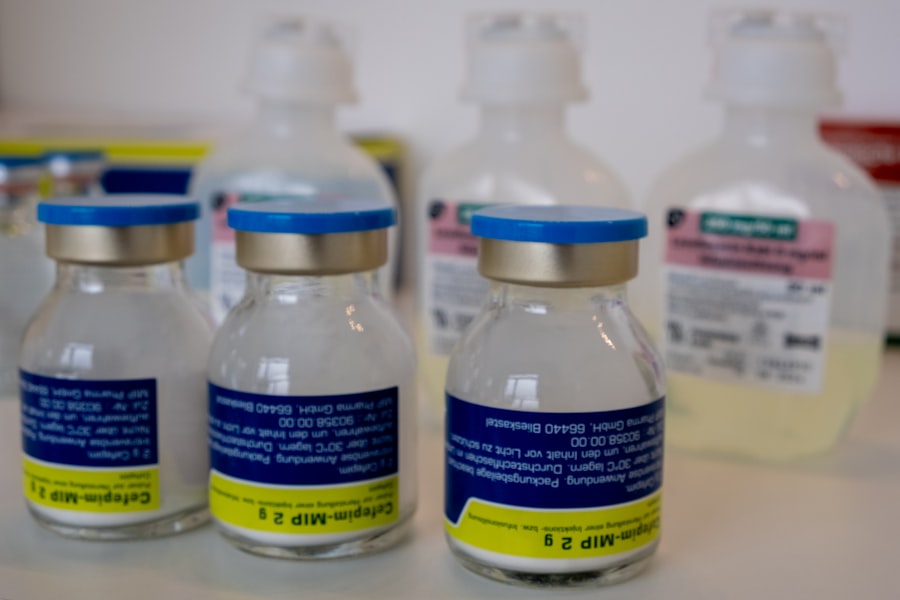
Following successful completion of Phase III trials, pharmaceutical companies submit their findings to regulatory agencies for approval. In the United States, this process involves submitting a New Drug Application (NDA) or Biologics License Application (BLA) to the FDRegulatory bodies review all data from preclinical and clinical studies to ensure that the treatment meets safety and efficacy standards before it can be marketed to healthcare providers and patients. Once a drug receives approval, it does not signify the end of scrutiny; post-market surveillance becomes essential for ongoing monitoring of its safety in real-world settings.
This phase involves collecting data on adverse events that may occur after widespread use, which can help identify rare side effects not observed during clinical trials due to limited sample sizes. Regulatory agencies often require manufacturers to conduct post-marketing studies or risk evaluation and mitigation strategies (REMS) to ensure continued safety monitoring.
Challenges and Ethical Considerations in Clinical Trials
Conducting clinical trials presents numerous challenges that researchers must navigate carefully. One significant challenge is recruitment; finding suitable participants who meet specific inclusion criteria can be difficult, particularly for rare diseases or conditions with strict eligibility requirements. Additionally, maintaining participant retention throughout lengthy trial periods is crucial for obtaining reliable data but can be hindered by factors such as side effects or logistical issues related to trial visits.
Ethical considerations also play a central role in clinical trial design and implementation. Researchers must ensure informed consent is obtained from all participants, meaning they fully understand the risks and benefits associated with their involvement in the study. This process can be particularly complex when dealing with vulnerable populations or individuals unable to provide consent themselves.
Furthermore, ethical dilemmas may arise when considering placebo-controlled trials in situations where effective treatments already exist; researchers must balance scientific rigor with moral responsibility toward patient welfare.
Future Directions in Medical Research
The landscape of clinical trials is evolving rapidly due to advancements in technology and changes in regulatory frameworks. One promising direction is the integration of real-world evidence (RWE) into clinical research. RWE leverages data collected outside traditional clinical trial settings—such as electronic health records and patient registries—to provide insights into treatment effectiveness in broader populations.
This approach can enhance understanding of how treatments perform in everyday clinical practice and inform future trial designs. Another exciting development is the rise of adaptive trial designs, which allow for modifications to ongoing studies based on interim results. This flexibility can lead to more efficient use of resources and faster identification of effective treatments while minimizing risks to participants.
Additionally, innovations such as artificial intelligence (AI) are being employed to streamline patient recruitment processes and analyze vast datasets more effectively, potentially transforming how clinical research is conducted in the future. As we look ahead, it is clear that clinical trials will continue to be integral to advancing medical science. By addressing existing challenges and embracing new methodologies, researchers can enhance their ability to develop safe and effective treatments that improve patient outcomes across diverse populations.
