

Navigating the complex landscape of clinical trials can feel like traversing a winding path, each phase presenting its own distinct terrain and set of challenges. For patients, caregivers, and even researchers new to the process, understanding these stages is crucial for informed decision-making and successful participation. This guide aims to demystify the journey of drug development, from the initial whispers of scientific inquiry to the widespread availability of a new medicine.
Before a promising compound ever reaches human subjects, it undergoes a rigorous period of laboratory investigation and animal testing. This preclinical phase is the bedrock upon which the entire clinical trial structure is built. Think of it as meticulously examining the blueprints and stress-testing the building materials before construction even begins.
Laboratory Investigations (In Vitro)

The initial steps often involve “in vitro” studies, meaning experiments conducted in test tubes or petri dishes, outside of a living organism. Here, researchers investigate a drug’s basic properties:
- Mechanism of Action: How does the potential drug interact with cells or biological targets? Does it bind to a specific receptor, inhibit an enzyme, or disrupt a particular cellular pathway? This is akin to understanding how a key fits into a lock.
- Potency and Efficacy: Does the compound show promise in alleviating a disease model in these controlled settings? Against common viruses, for instance, scientists might test if a new antiviral compound effectively inhibits viral replication in cell cultures.
- Toxicity Screening: Early assessments for potential harmful effects on cells are conducted. This is a preliminary filter to identify compounds that might be too toxic even for further investigation.
Animal Studies (In Vivo)
Once a compound shows sufficient promise in vitro, it progresses to “in vivo” studies, utilizing animal models. These studies are designed to mimic human physiology and disease processes as closely as possible.
- Pharmacokinetics (PK): This branch of study examines how the body handles the drug. It investigates:
- Absorption: How is the drug taken into the bloodstream?
- Distribution: Where does the drug go in the body?
- Metabolism: How is the drug broken down by the body?
- Excretion: How is the drug eliminated from the body?

Understanding PK is vital because it helps predict how much of the drug will reach its target and for how long.
- Pharmacodynamics (PD): This focuses on the drug’s effects on the body. It addresses:
- The biological effects of the drug.
- The relationship between drug concentration and its effect.
PD studies help determine if the drug actually works as intended in a living system and at what dose.
- Safety and Toxicology: Comprehensive studies are conducted to identify potential side effects and determine safe dosage ranges. These studies assess both short-term and long-term toxicity, including effects on organs, reproductive health, and carcinogenicity (potential to cause cancer). This stage acts as a critical safety checkpoint.
If preclinical studies indicate that a drug is both reasonably safe and likely to be effective, it can then be submitted to regulatory authorities, such as the Food and Drug Administration (FDA) in the United States or the European Medicines Agency (EMA) in Europe, for approval to begin human testing. This application is known as an Investigational New Drug (IND) application.
Phase 1: The First Human Step
This phase is the initial foray into human testing. It’s a critical juncture, akin to a pilot taking a new aircraft on its very first flight. The primary goal here is safety and understanding how the drug behaves in the human body.
Objectives of Phase 1 Trials
- Safety and Tolerability: The paramount concern is determining if the drug is safe for human consumption and identifying any immediate side effects. Researchers closely monitor participants for adverse events.
- Dosage Range Finding: Phase 1 trials help establish the maximum tolerated dose (MTD) – the highest dose that can be given without causing unacceptable toxicity. They also explore a range of lower doses to understand the dose-response relationship.
- Pharmacokinetics and Pharmacodynamics in Humans: Similar to preclinical studies, PK and PD are further investigated in humans. This includes understanding absorption, distribution, metabolism, excretion, and the drug’s initial effects.
Participant Selection
- Small Group: Phase 1 trials typically involve a small number of healthy volunteers (usually between 20 and 100). In cases where the drug is intended for a serious or life-threatening disease, patients with that condition might be included, especially if the potential benefits outweigh the risks.
- Exclusion Criteria: Strict eligibility criteria are in place to ensure the safety of participants. Individuals with certain medical conditions, those taking specific medications, or pregnant or breastfeeding individuals are often excluded.
Trial Design
- Open-Label or Single-Blind: Often, Phase 1 trials are open-label, meaning both the researchers and participants know which treatment is being given. In some cases, they might be single-blinded, where only the researchers know.
- Dose Escalation: The trial may begin with a very low dose, and if it is well-tolerated, the dose is gradually increased in subsequent groups of participants. This dose-escalation strategy is a cornerstone of assessing safety.
The duration of Phase 1 trials can vary but often lasts several months. Upon successful completion, if the drug is deemed safe enough, it moves to Phase 2.
Phase 2: Proving Efficacy
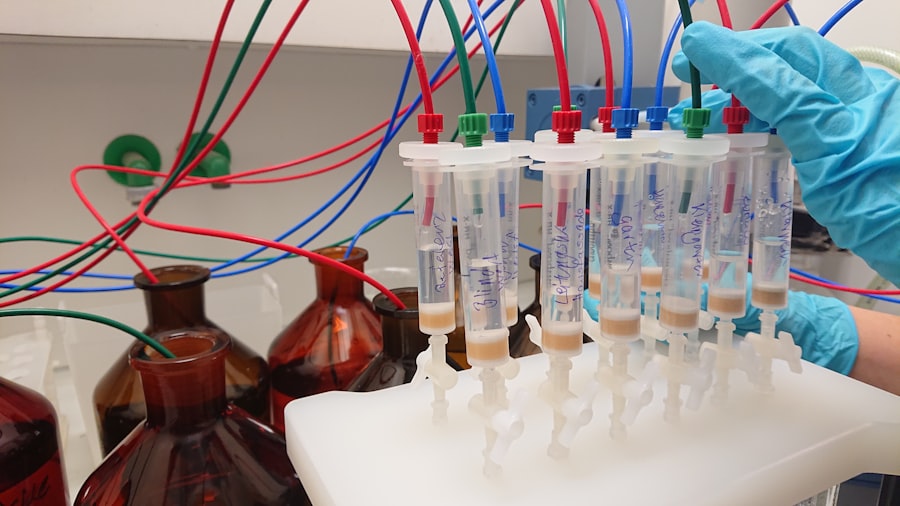
With safety established in Phase 1, Phase 2 trials shift the focus to determining if the drug actually works against the targeted disease or condition. This phase is like testing a new tool to see if it can effectively perform its intended task.
Key Objectives of Phase 2 Trials
- Efficacy: The primary goal is to assess whether the drug has a positive effect on the disease. This might be measured by improvements in symptoms, reduction in tumor size, or other disease-specific markers.
- Further Safety Evaluation: While efficacy is the main focus, continued monitoring for side effects and their severity is crucial.
- Optimal Dosage Determination: Phase 2 trials aim to identify the most effective and safe dose or range of doses for treating the condition. This often involves comparing different doses against each other or against a placebo.
Participant Enrollment
- Larger Groups: Phase 2 trials involve a larger number of participants than Phase 1, typically ranging from several dozen to a few hundred patients who have the specific disease or condition being studied.
- Inclusion/Exclusion Criteria: Specific criteria are used to select patients who are likely to benefit from the drug and for whom it is safe to administer.
Common Trial Designs
- Randomized Controlled Trials (RCTs): Many Phase 2 trials are randomized, meaning participants are randomly assigned to receive either the investigational drug or a placebo (an inactive substance) or sometimes an existing standard treatment. This randomization helps minimize bias.
- Blinded Studies: Phase 2 trials are often blinded (single-blind or double-blind) to prevent bias from participants or researchers knowing who is receiving which treatment. A double-blind trial, where neither the participants nor the researchers know the treatment assignment, is considered the gold standard.
- Exploratory and Confirmatory: Phase 2 can be further divided into exploratory (Phase 2a) and confirmatory (Phase 2b) trials. Phase 2a might explore various doses and identify promising efficacy signals, while Phase 2b focuses on confirming efficacy at a specific dose in a larger group.
The success of Phase 2 is a significant hurdle, demonstrating that the drug has therapeutic potential. If the results are positive, the drug advances to the most extensive and critical phase: Phase 3.
Phase 3: Confirmation and Large-Scale Testing
Phase 3 trials are the ultimate test of a drug’s effectiveness and safety before it can be considered for approval by regulatory agencies. This is where the drug undergoes its most rigorous scrutiny, akin to a product undergoing extensive real-world testing under varied conditions before mass production.
Defining Characteristics of Phase 3 Trials
- Large Patient Populations: These trials involve hundreds to thousands of participants, often across multiple study centers and countries. This broad participation helps to detect rarer side effects that might not have been apparent in smaller groups.
- Comparison to Standard Treatment or Placebo: Phase 3 trials are almost always randomized, controlled, and double-blinded. They compare the investigational drug against the current standard of care for the disease or against a placebo. The goal is to demonstrate that the new drug is at least as effective as, or superior to, existing treatments, with an acceptable safety profile.
- Confirmation of Efficacy and Safety: The primary objective remains to confirm the drug’s effectiveness and to further evaluate its safety in a diverse patient population. Data collected here is crucial for regulatory submission.
Key Considerations in Phase 3
- Statistical Power: With large numbers of participants and well-designed studies, Phase 3 trials have the statistical power to detect even small differences in efficacy and safety between treatment groups. This rigorous statistical analysis is vital for drawing reliable conclusions.
- Long-Term Data Collection: Participants in Phase 3 trials are typically followed for extended periods to assess the durability of the treatment effect and to identify any long-term side effects.
- Subgroup Analysis: Researchers may analyze data from specific subgroups of patients (e.g., based on age, gender, or disease severity) to understand how the drug performs in different populations.
The data generated from Phase 3 trials is the cornerstone of the marketing authorization application (MAA) submitted to regulatory agencies. A successful Phase 3 trial is a strong indicator that the drug is ready for widespread use.
Phase 4: Post-Market Surveillance
| Phase | Purpose | Number of Participants | Duration | Key Focus | Success Rate |
|---|---|---|---|---|---|
| Phase 0 | Microdosing to understand pharmacodynamics and pharmacokinetics | 10-15 | Several months | Safety and biological activity | Not applicable |
| Phase I | Assess safety, dosage range, and side effects | 20-100 healthy volunteers | Several months | Safety and dosage | Approximately 70% |
| Phase II | Evaluate efficacy and side effects | 100-300 patients | Several months to 2 years | Efficacy and side effects | Approximately 33% |
| Phase III | Confirm effectiveness, monitor adverse reactions, compare to standard treatments | 1,000-3,000 patients | 1-4 years | Effectiveness and safety | Approximately 25-30% |
| Phase IV | Post-marketing surveillance to detect long-term effects | Varies (thousands) | Ongoing | Long-term safety and effectiveness | Not applicable |
Even after a drug receives regulatory approval and becomes available to the public, the journey of understanding its effects doesn’t end. Phase 4 trials, also known as post-marketing surveillance or post-approval studies, continue to monitor the drug’s performance in the real world. This is like a company continuing to monitor customer feedback and product performance after a product has been launched.
The Purpose of Phase 4 Studies
- Long-Term Safety Monitoring: Phase 4 allows for the detection of rare or long-term side effects that may not have been identified in earlier, smaller trials. This can include effects that only emerge after years of use.
- Real-World Effectiveness: While earlier phases assess efficacy under controlled conditions, Phase 4 examines how the drug performs in routine clinical practice, with a wider range of patients and co-existing conditions. This is often referred to as “effectiveness” versus “efficacy.”
- New Indications and Dosing: These studies can explore new uses for the drug (new indications) or investigate optimal dosing strategies for specific patient groups or conditions.
- Cost-Effectiveness Studies: Phase 4 can also be used to assess the economic value of the drug compared to existing treatments, contributing to healthcare policy and reimbursement decisions.
How Phase 4 is Conducted
- Observational Studies: Many Phase 4 studies are observational, meaning researchers collect data on patients receiving the drug in their regular healthcare settings without actively intervening.
- Specific Clinical Trials: In some cases, dedicated clinical trials may be initiated to address specific questions about safety, effectiveness in a new population, or comparison with other treatments.
- Adverse Event Reporting Systems: Healthcare professionals and patients can report suspected adverse events through established systems, which are continuously monitored by regulatory agencies and pharmaceutical companies.
Phase 4 plays a crucial role in informing healthcare providers and patients about a drug’s full profile, ensuring its continued safe and effective use. It also allows for timely identification and management of any emerging issues. The insights gained can lead to updates in prescribing information, warnings, or even withdrawal of the drug from the market if significant safety concerns arise.
