

Clinical trials are a cornerstone of modern medicine, serving as the bridge between laboratory research and the practical application of new therapies in patient care. These meticulously designed studies are essential for determining the safety and efficacy of new drugs, medical devices, and treatment protocols. By adhering to rigorous scientific standards, clinical trials provide the necessary evidence to support regulatory approval and clinical practice.
The process is not only vital for advancing medical knowledge but also for ensuring that patients receive treatments that are both effective and safe. The journey of a new treatment from concept to clinical use is complex and multifaceted. It involves a series of carefully structured phases, each designed to answer specific research questions while safeguarding participant welfare.

The importance of clinical trials cannot be overstated; they are instrumental in identifying potential side effects, understanding the mechanisms of action, and ultimately determining whether a new intervention can improve patient outcomes. As such, navigating the landscape of clinical trials is crucial for researchers, healthcare professionals, and patients alike.
Key Takeaways
- Clinical trials progress through phases I to III to ensure safety, efficacy, and dosage of new treatments.
- Preclinical research is essential for initial discovery and testing before human trials begin.
- FDA approval is required after successful phase III trials to bring new drugs to market.
- Post-market surveillance and phase IV trials monitor long-term effects and safety after approval.
- Navigating clinical trials is crucial for advancing medical treatments and patient safety.
Preclinical Research and Discovery

Before a new drug or treatment can enter clinical trials, it undergoes extensive preclinical research. This phase typically involves laboratory experiments and animal studies aimed at assessing the biological activity of a compound. Researchers explore various aspects, including pharmacodynamics (how the drug affects the body) and pharmacokinetics (how the body processes the drug).
This foundational work is critical for identifying promising candidates that warrant further investigation in human subjects. Preclinical research also plays a pivotal role in understanding potential toxicity and side effects. For instance, if a new cancer drug shows promise in killing tumor cells in vitro, researchers will then evaluate its effects in animal models to assess its safety profile.
This stage often involves dose-ranging studies to determine the optimal dosage that maximizes therapeutic effects while minimizing adverse reactions. Only after thorough evaluation and validation of safety and efficacy in preclinical studies can a compound progress to the clinical trial phase.
Phase I Clinical Trials: Safety and Dosage
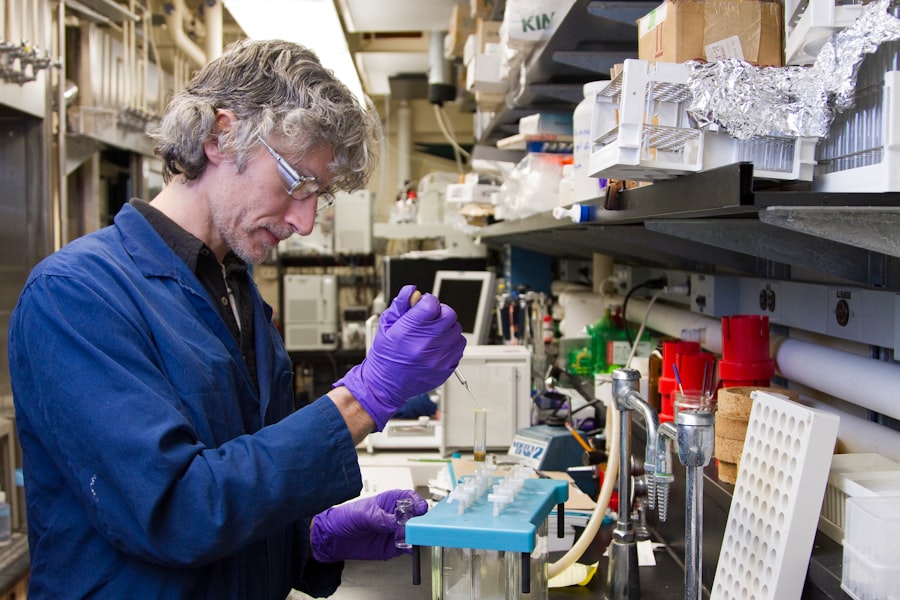
Phase I clinical trials mark the first time a new drug is tested in humans, typically involving a small group of healthy volunteers or patients. The primary objective of this phase is to evaluate the safety of the drug, determine a safe dosage range, and identify any side effects. Researchers closely monitor participants for adverse reactions, which can provide critical insights into how the drug interacts with the human body.
During Phase I trials, various dosing regimens may be explored to establish the maximum tolerated dose (MTD). For example, if a new chemotherapy agent is being tested, researchers might start with a low dose and gradually increase it while monitoring participants for toxicity. This iterative process helps to pinpoint the dosage that balances efficacy with safety.
Additionally, pharmacokinetic studies are often conducted during this phase to understand how the drug is absorbed, distributed, metabolized, and excreted by the body.
Phase II Clinical Trials: Efficacy and Side Effects
Once a drug has demonstrated an acceptable safety profile in Phase I trials, it progresses to Phase II trials, where the focus shifts toward evaluating its efficacy. This phase typically involves a larger group of participants who have the condition that the drug aims to treat. Researchers aim to determine whether the drug produces a beneficial effect on the disease or condition while continuing to monitor for side effects.
In Phase II trials, researchers often employ randomized controlled designs to compare the new treatment against a placebo or standard therapy. For instance, if a new antidepressant is being tested, participants may be randomly assigned to receive either the new medication or an existing treatment. This design helps to isolate the effects of the new drug from other variables.
Additionally, Phase II trials may explore different dosing strategies or treatment regimens to optimize therapeutic outcomes while minimizing adverse effects.
Phase III Clinical Trials: Large-Scale Testing
| Clinical Phase | Primary Objective | Number of Participants | Duration | Key Focus | Success Rate (%) |
|---|---|---|---|---|---|
| Phase 0 | Assess pharmacodynamics and pharmacokinetics | 10-15 | Several months | Microdosing to gather preliminary data | Not applicable |
| Phase I | Evaluate safety and dosage | 20-100 healthy volunteers | Several months | Safety profile and side effects | 70% |
| Phase II | Assess efficacy and side effects | 100-300 patients | Several months to 2 years | Effectiveness and optimal dose | 33% |
| Phase III | Confirm effectiveness and monitor adverse reactions | 1,000-3,000 patients | 1-4 years | Comparison with standard treatments | 25-30% |
| Phase IV | Post-marketing surveillance | Thousands of patients | Ongoing | Long-term effects and safety | Not applicable |
Phase III clinical trials represent a critical juncture in the drug development process, as they involve large-scale testing across diverse populations. These trials are designed to confirm the efficacy of the drug established in Phase II while further assessing its safety in a broader context. Typically involving hundreds or thousands of participants, Phase III trials provide robust data that regulatory agencies require for approval.
The design of Phase III trials often includes multicenter approaches, allowing researchers to gather data from various geographic locations and demographic groups. This diversity is essential for understanding how different populations may respond to the treatment. For example, if a new diabetes medication is being tested, researchers will ensure that participants represent various ages, ethnicities, and comorbid conditions.
The results from these trials are pivotal; they not only inform regulatory decisions but also guide clinical practice by providing evidence-based recommendations for treatment.
FDA Approval Process

Following successful completion of Phase III trials, the next step is submitting a New Drug Application (NDA) to regulatory agencies such as the U.S. Food and Drug Administration (FDA). This comprehensive document includes all data from preclinical and clinical studies, manufacturing information, labeling proposals, and plans for post-marketing surveillance.
The FDA meticulously reviews this information to assess whether the benefits of the drug outweigh its risks. The review process can be lengthy and complex, often taking several months to years depending on various factors such as the nature of the drug and the completeness of the application. During this time, FDA reviewers may request additional information or clarification from the sponsoring company.
If approved, the drug receives market authorization; however, this does not mark the end of scrutiny. The FDA may impose post-marketing requirements or commitments to ensure ongoing safety monitoring.
Post-Market Surveillance and Phase IV Trials
Once a drug is approved and available on the market, it enters a phase known as post-market surveillance or Phase IV trials. These studies are crucial for monitoring long-term safety and effectiveness in real-world settings. While pre-approval clinical trials provide valuable insights into a drug’s performance under controlled conditions, Phase IV studies help identify rare side effects or long-term complications that may not have been evident during earlier phases.
Post-market surveillance can take various forms, including observational studies, registries, or randomized controlled trials designed specifically for post-marketing evaluation. For instance, if a new vaccine is introduced, health authorities may conduct ongoing studies to monitor its effectiveness across different populations and track any adverse events that arise after widespread administration. This continuous monitoring ensures that any emerging safety concerns are promptly addressed and that healthcare providers have access to up-to-date information regarding treatment options.
The Importance of Clinical Trial Navigation
Navigating the landscape of clinical trials is essential for all stakeholders involved in healthcare—from researchers developing innovative therapies to patients seeking effective treatments. Understanding each phase of clinical trials provides insight into how new drugs are evaluated for safety and efficacy before reaching patients. As medical science continues to evolve rapidly, so too does the complexity of clinical trial design and implementation.
For patients considering participation in clinical trials, awareness of their rights and responsibilities is paramount. Informed consent processes ensure that participants understand potential risks and benefits before enrolling in a study. Moreover, as healthcare professionals increasingly rely on evidence-based practices informed by clinical trial data, it becomes imperative for them to stay abreast of ongoing research developments.
In summary, clinical trials are not merely regulatory hurdles; they are vital processes that underpin advancements in medical science and patient care. By fostering an environment where rigorous research can thrive while prioritizing patient safety, we can continue to make strides toward more effective treatments and improved health outcomes for all.
