
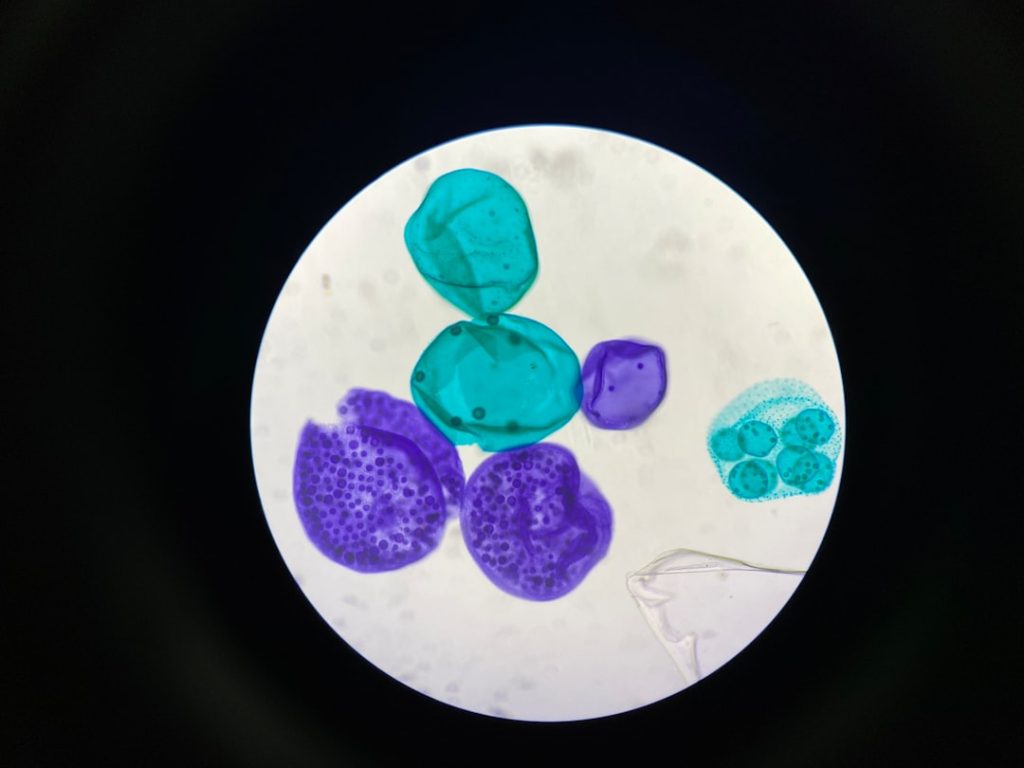
Cytology is the biological discipline dedicated to cell study and represents a cornerstone for comprehending microscopic life processes. Cells constitute the fundamental structural and functional units of all living organisms, with their architecture and operations being closely interconnected. Cellular composition includes three primary components: the cell membrane, cytoplasm, and nucleus, which collaborate to maintain cellular equilibrium and enable essential life processes.
The cell membrane functions as a semipermeable boundary that controls molecular transport into and out of the cell. The cytoplasm contains specialized structures called organelles that execute distinct metabolic functions. The nucleus serves as the cellular command center, housing deoxyribonucleic acid (DNA) that governs cellular operations and genetic inheritance.

Cell structure analysis extends beyond theoretical knowledge, providing critical insights for medicine, genetics, and biotechnology applications. The classification of cells into prokaryotic and eukaryotic categories demonstrates the diversity of biological organization. Prokaryotic cells, exemplified by bacterial organisms, are characterized by the absence of a membrane-bound nucleus and exhibit relatively simple internal organization.
Eukaryotic cells, which comprise plant, animal, and fungal organisms, feature a membrane-enclosed nucleus and multiple specialized organelles that enable compartmentalized cellular functions. This fundamental cellular distinction is essential for understanding organism-specific physiological processes and environmental interactions.
Key Takeaways
- Cytology provides fundamental insights into cell structure, function, and organelle roles essential for life processes.
- Studying cells is crucial for understanding diseases and advancing medical research and treatments.
- Modern cytology has evolved significantly, incorporating advanced imaging and analysis techniques.
- Cellular communication and signaling pathways are key to understanding how cells interact and function collectively.
- Cytology plays a vital role in biotechnology, drug development, and education, shaping future scientific progress.

The Intricate Machinery of the Cell: Exploring Organelles and Their Roles
The cell is often likened to a factory, with each organelle serving a specific role akin to different departments within an industrial complex. Mitochondria, often referred to as the powerhouse of the cell, are responsible for producing adenosine triphosphate (ATP) through cellular respiration. This process not only provides energy for cellular activities but also plays a critical role in regulating metabolic pathways.
The endoplasmic reticulum (ER), which comes in two forms—rough and smooth—functions as a site for protein synthesis and lipid production. The rough ER is studded with ribosomes that translate mRNA into proteins, while the smooth ER is involved in lipid synthesis and detoxification processes. Another vital organelle is the Golgi apparatus, which acts as a processing and packaging center for proteins and lipids synthesized in the ER.
It modifies these molecules and sorts them for transport to their final destinations, either within the cell or outside it. Lysosomes, often described as the cell’s waste disposal system, contain enzymes that break down macromolecules, old cell parts, and microorganisms. This recycling process is essential for maintaining cellular health and function.
Each organelle’s unique structure complements its function, illustrating the intricate design of cellular machinery.
The Role of Cytology in Understanding Disease: How Cell Studies Contribute to Medical Research
Cytology plays a pivotal role in medical research by providing insights into the cellular basis of diseases. By examining cells under a microscope, researchers can identify abnormalities that may indicate disease states. For example, cytological techniques are routinely employed in cancer diagnosis through fine-needle aspiration biopsies.
In this procedure, cells are extracted from a suspicious mass and examined for atypical features that suggest malignancy. The ability to detect cancer at an early stage significantly improves treatment outcomes and patient survival rates. Moreover, cytology extends beyond cancer diagnosis; it is instrumental in understanding various diseases at the cellular level.
For instance, studies on autoimmune diseases have revealed how immune cells can mistakenly target healthy tissues. By analyzing these cells’ behavior and interactions, researchers can develop targeted therapies that modulate immune responses. Additionally, cytological techniques are employed in virology to study how viruses invade host cells and replicate.
Understanding these mechanisms is crucial for developing antiviral drugs and vaccines that can effectively combat viral infections.
The Evolution of Cytology: From Early Observations to Modern Techniques
The field of cytology has undergone significant evolution since its inception in the 17th century when scientists like Robert Hooke first described cells using a rudimentary microscope. Hooke’s observations laid the groundwork for cell theory, which posits that all living organisms are composed of cells. Over the centuries, advancements in microscopy have revolutionized our understanding of cellular structures.
The invention of the compound microscope allowed for greater magnification and resolution, enabling scientists to observe cells in greater detail. The 20th century marked a turning point in cytology with the advent of electron microscopy, which provided unprecedented insights into cellular ultrastructure. This technology allowed researchers to visualize organelles at nanometer resolution, revealing complex details about their morphology and arrangement within cells.
Additionally, techniques such as immunofluorescence microscopy have enabled scientists to study specific proteins within cells by tagging them with fluorescent markers. These advancements have not only enhanced our understanding of cell biology but have also paved the way for innovative research methodologies that continue to shape the field.
The Future of Cytology: Advancements in Cell Imaging and Analysis
| Metric | Value | Description |
|---|---|---|
| Term | Cytology | The medical term for the study of cells |
| Field Type | Biological Science | Branch of science focusing on cellular structure and function |
| Common Techniques | Microscopy, Cell Staining, Flow Cytometry | Methods used to analyze and study cells |
| Applications | Diagnosis of diseases, Cancer detection, Research | Practical uses of cytology in medicine and science |
| Related Disciplines | Histology, Molecular Biology, Pathology | Fields closely associated with cytology |
As technology continues to advance at an unprecedented pace, the future of cytology promises exciting developments in cell imaging and analysis. One such advancement is the emergence of super-resolution microscopy techniques, which allow scientists to visualize cellular structures beyond the diffraction limit of light. Techniques like STED (Stimulated Emission Depletion) microscopy enable researchers to observe dynamic processes within living cells with remarkable clarity.
This capability opens new avenues for studying cellular behavior in real-time and understanding how cells respond to various stimuli. Moreover, advancements in artificial intelligence (AI) and machine learning are transforming how cytological data is analyzed. AI algorithms can process vast amounts of imaging data quickly and accurately, identifying patterns that may be imperceptible to human observers.
This technology has significant implications for diagnostics; for instance, AI can assist pathologists in identifying cancerous cells more efficiently than traditional methods. As these technologies continue to evolve, they will undoubtedly enhance our ability to study cells and their functions comprehensively.
Unlocking the Mysteries of Cellular Communication: Signaling Pathways and Cell-to-Cell Interactions
Cellular communication is a fundamental aspect of biology that governs how cells interact with one another and respond to their environment. Signaling pathways involve complex networks of proteins that transmit signals from one part of a cell to another or between different cells. These pathways are crucial for regulating various cellular processes such as growth, differentiation, and apoptosis (programmed cell death).
For example, growth factors released by one cell can bind to receptors on neighboring cells, triggering a cascade of intracellular events that promote cell division. Cell-to-cell interactions are equally important in maintaining tissue homeostasis and coordinating responses to external stimuli. Gap junctions allow direct communication between adjacent cells by forming channels that enable the passage of ions and small molecules.
This direct communication is vital in tissues such as cardiac muscle, where synchronized contractions are necessary for proper heart function. Additionally, extracellular matrix components play a significant role in mediating cell interactions by providing structural support and biochemical signals that influence cell behavior.
The Impact of Cytology on Biotechnology and Drug Development
Cytology has profoundly influenced biotechnology and drug development by providing essential insights into cellular mechanisms that can be targeted for therapeutic interventions. Understanding how cells respond to drugs at the molecular level allows researchers to design more effective treatments with fewer side effects. For instance, cytological studies have elucidated how cancer cells develop resistance to chemotherapy drugs by altering their signaling pathways or increasing drug efflux mechanisms.
Furthermore, cytology plays a critical role in biopharmaceutical development by enabling researchers to produce therapeutic proteins using cultured mammalian cells. Techniques such as recombinant DNA technology allow scientists to insert genes encoding therapeutic proteins into host cells, which then produce these proteins in large quantities. This approach has led to the development of biologics such as monoclonal antibodies used in treating various diseases, including cancer and autoimmune disorders.
Cytology in the Classroom: Teaching the Next Generation about the Wonders of Cell Biology
Educating future generations about cytology is essential for fostering an appreciation for biology and its relevance to everyday life. Incorporating hands-on activities such as microscopy labs allows students to observe cells firsthand, enhancing their understanding of cellular structures and functions. By examining plant and animal cells under a microscope, students can appreciate the diversity of cell types and their specialized roles within organisms.
Moreover, integrating modern technologies into the classroom can further engage students in cytological studies. Virtual microscopy tools enable students to explore high-resolution images of cells without needing physical slides or microscopes. Interactive simulations can illustrate complex concepts such as cellular signaling pathways or organelle functions in an engaging manner.
By equipping students with knowledge about cytology’s significance in health care, biotechnology, and environmental science, educators can inspire future scientists who will continue to unravel the mysteries of life at the cellular level.
