

Clinical trials are a cornerstone of modern medicine, serving as the primary method for evaluating the safety and efficacy of new treatments, drugs, and medical devices. These meticulously designed studies are essential for advancing healthcare, as they provide the evidence needed to support regulatory approvals and clinical practice guidelines. The process typically involves several phases, each with specific objectives and methodologies, ranging from small-scale Phase I trials that assess safety to large-scale Phase III trials that evaluate effectiveness in diverse populations.
The rigorous nature of clinical trials ensures that new interventions are not only effective but also safe for public use. The significance of clinical trials extends beyond the immediate outcomes of the studies themselves; they also play a crucial role in shaping the future of medical research and patient care. By systematically testing hypotheses and gathering data, clinical trials contribute to the body of scientific knowledge that informs clinical decision-making.

Moreover, they offer patients access to cutting-edge therapies that may not yet be available through standard treatment protocols. As such, clinical trials are not merely a regulatory requirement but a vital component of the healthcare ecosystem that fosters innovation and improves patient outcomes.
Key Takeaways
- Clinical trials are essential for developing new medical treatments but face significant traditional challenges.
- Innovation is crucial to address inefficiencies and improve trial design and execution.
- Innovative platforms offer advanced tools and methodologies to enhance clinical trial processes.
- Successful case studies demonstrate the effectiveness and benefits of adopting these new platforms.
- Embracing innovation in clinical trials promises improved outcomes and accelerated medical advancements.
Challenges in Traditional Clinical Trials

Despite their importance, traditional clinical trials face numerous challenges that can hinder their effectiveness and efficiency. One of the most significant issues is recruitment and retention of participants. Many trials struggle to meet enrollment targets, often due to stringent eligibility criteria, lack of awareness among potential participants, or logistical barriers such as travel requirements.
This can lead to delays in study timelines and increased costs, ultimately affecting the speed at which new treatments reach the market. For instance, a study published in the Journal of Clinical Oncology found that nearly 50% of cancer clinical trials fail to meet their enrollment goals, which can prolong the development of potentially life-saving therapies. Another challenge is the complexity of trial design and execution.
Traditional clinical trials often involve multiple sites, extensive paperwork, and a myriad of regulatory requirements that can complicate the process. The need for extensive monitoring and data collection can also lead to increased administrative burdens on researchers and healthcare providers. Furthermore, the rigid structure of many trials may not adequately reflect real-world patient populations or treatment scenarios, limiting the generalizability of findings.
This disconnect can result in a lack of applicability in everyday clinical practice, as treatments that perform well in controlled environments may not yield the same results in broader patient populations.
The Need for Innovation in Clinical Trials
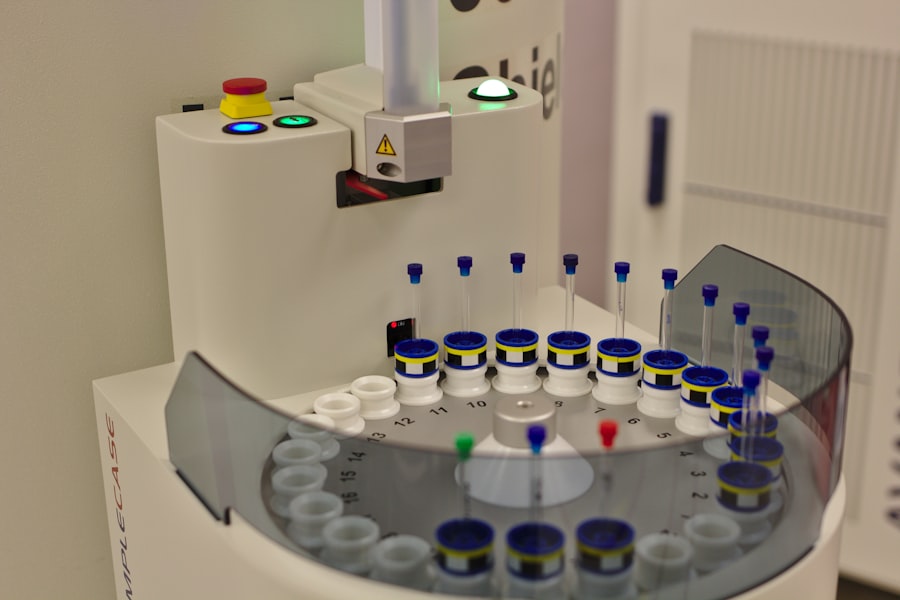
Given these challenges, there is a pressing need for innovation in the design and implementation of clinical trials. The traditional model, while effective in many respects, is increasingly seen as inadequate for addressing the complexities of modern healthcare. As medical science advances and new technologies emerge, there is an opportunity to rethink how clinical trials are conducted.
Innovations such as adaptive trial designs, decentralized trials, and the integration of real-world evidence are gaining traction as potential solutions to enhance trial efficiency and participant engagement. Adaptive trial designs allow researchers to modify aspects of a trial based on interim results, enabling more flexible responses to emerging data. This approach can lead to more efficient use of resources and faster decision-making regarding treatment efficacy.
Decentralized trials leverage technology to conduct research remotely, allowing participants to engage from their homes rather than traditional clinical sites. This model not only broadens access to diverse populations but also reduces logistical barriers that often deter participation. By embracing these innovative approaches, the clinical trial landscape can evolve to better meet the needs of both researchers and patients.
Overview of Innovative Platforms
Innovative platforms for clinical trials encompass a range of technologies and methodologies designed to streamline processes and enhance participant engagement. One prominent example is the use of electronic data capture (EDC) systems, which facilitate real-time data collection and management. These platforms enable researchers to gather information more efficiently while minimizing errors associated with manual data entry.
Additionally, EDC systems can integrate with other digital tools such as electronic health records (EHRs), allowing for seamless data sharing and analysis. Another noteworthy innovation is the rise of mobile health (mHealth) applications that empower participants to track their health metrics and report outcomes directly from their smartphones. These applications can enhance patient engagement by providing real-time feedback and reminders about study protocols.
Furthermore, they can facilitate remote monitoring of participants’ health status, allowing researchers to collect valuable data without requiring frequent site visits. The integration of telemedicine into clinical trials also represents a significant advancement, enabling virtual consultations between participants and healthcare providers, thereby reducing barriers to participation.
Advantages of Innovative Platforms in Clinical Trials
| Metric | Description | Typical Value / Range | Importance |
|---|---|---|---|
| Patient Enrollment Rate | Number of patients enrolled per month | 50 – 200 patients/month | High |
| Data Entry Accuracy | Percentage of error-free data entries | 95% – 99.9% | High |
| Query Resolution Time | Average time to resolve data queries (days) | 1 – 3 days | Medium |
| Protocol Deviation Rate | Percentage of deviations from the study protocol | Less than 5% | High |
| Site Activation Time | Time from site selection to site activation (days) | 30 – 60 days | Medium |
| Patient Retention Rate | Percentage of patients completing the trial | 80% – 95% | High |
| Adverse Event Reporting Time | Time to report adverse events (hours) | 24 – 48 hours | High |
| System Uptime | Percentage of time the platform is operational | 99.5% – 99.99% | High |
| Number of Active Trials | Total clinical trials currently managed on the platform | 10 – 500 | Medium |
| Regulatory Compliance Rate | Percentage of trials compliant with regulatory standards | 100% | Critical |
The advantages of adopting innovative platforms in clinical trials are manifold. First and foremost, these technologies can significantly enhance participant recruitment and retention rates. By reducing logistical burdens and making participation more convenient through remote options, innovative platforms can attract a broader demographic of participants.
This inclusivity is crucial for ensuring that trial results are representative of diverse populations, ultimately leading to more generalizable findings. Moreover, innovative platforms can improve data quality and integrity. Real-time data capture minimizes the risk of errors associated with traditional data collection methods, while automated monitoring systems can flag inconsistencies or anomalies in participant responses.
This heightened level of oversight not only enhances the reliability of study results but also accelerates the overall timeline for data analysis and reporting. Additionally, by leveraging advanced analytics and machine learning algorithms, researchers can gain deeper insights into treatment effects and patient outcomes, paving the way for more personalized approaches to medicine.
Case Studies of Successful Implementation

Several case studies illustrate the successful implementation of innovative platforms in clinical trials, showcasing their potential to transform research methodologies. One notable example is the use of decentralized trial models in a large-scale study evaluating a new treatment for chronic obstructive pulmonary disease (COPD). By utilizing telehealth consultations and remote monitoring devices, researchers were able to enroll a diverse cohort of participants across multiple geographic locations without requiring them to travel to central study sites.
This approach not only expedited recruitment but also resulted in higher retention rates compared to traditional models. Another compelling case involves a pharmaceutical company that integrated mHealth applications into its clinical trial for a novel diabetes medication. Participants used a mobile app to log their daily blood glucose levels and medication adherence while receiving personalized feedback from healthcare providers through the platform.
This real-time engagement led to improved adherence rates and provided researchers with rich data on treatment effects in real-world settings. The success of this trial demonstrated how innovative platforms could enhance participant experience while yielding valuable insights into treatment efficacy.
Future Implications and Potential Impact
The future implications of adopting innovative platforms in clinical trials are profound. As technology continues to advance, we can expect further enhancements in trial design and execution that will reshape how research is conducted. The integration of artificial intelligence (AI) and machine learning into clinical trial processes holds great promise for optimizing patient selection, predicting outcomes, and identifying potential safety concerns earlier in the research timeline.
These advancements could lead to more efficient trials that require fewer resources while yielding robust data. Moreover, as regulatory bodies become more familiar with innovative methodologies, we may see a shift in how clinical trials are approved and monitored. Regulatory agencies are increasingly recognizing the value of real-world evidence generated through innovative platforms, which could pave the way for more flexible regulatory frameworks that accommodate new approaches to research.
This evolution could ultimately accelerate the development and approval of new therapies, bringing them to market more swiftly and improving patient access to cutting-edge treatments.
Conclusion and Call to Action
The landscape of clinical trials is at a pivotal juncture where innovation is not just beneficial but essential for overcoming existing challenges. As we have explored throughout this article, traditional models face significant hurdles that can impede progress in medical research. However, by embracing innovative platforms—ranging from decentralized trials to advanced data analytics—researchers can enhance participant engagement, improve data quality, and ultimately accelerate the development of new therapies.
It is imperative for stakeholders across the healthcare ecosystem—including researchers, regulatory bodies, and industry leaders—to collaborate in fostering an environment conducive to innovation in clinical trials. By investing in new technologies and methodologies, we can create a more efficient research landscape that prioritizes patient needs while advancing scientific knowledge. The call to action is clear: we must embrace change and leverage innovation to ensure that clinical trials continue to serve as a vital engine for medical progress in an ever-evolving healthcare landscape.
