

Hair loss, medically known as alopecia, is a condition that affects millions of individuals worldwide, transcending age, gender, and ethnicity. It can manifest in various forms, from gradual thinning to complete baldness, and can be triggered by a multitude of factors including genetics, hormonal changes, medical conditions, and environmental influences. The psychological impact of hair loss can be profound, often leading to diminished self-esteem and social withdrawal.
For many, hair is not merely a physical attribute but a significant aspect of identity and personal expression. As such, the quest for effective treatments has become a focal point in both dermatological research and cosmetic industries. The prevalence of hair loss is staggering; studies suggest that approximately 50% of men experience some degree of hair loss by the age of 50, while women can also face significant thinning, particularly post-menopause.

The most common form of hair loss is androgenetic alopecia, often referred to as male or female pattern baldness. This condition is characterized by a progressive thinning of hair on the scalp and is largely influenced by genetic predisposition and hormonal factors. Understanding the underlying mechanisms of hair loss is crucial for developing effective treatment strategies and improving the quality of life for those affected.
Key Takeaways
- Hair loss affects many individuals and has various causes and treatment options.
- Current treatments include medications and surgical procedures, but results vary.
- Clinical trials are exploring innovative therapies to improve hair regrowth outcomes.
- New treatments show promising results but may carry potential side effects and risks.
- Ongoing research aims to develop safer, more effective solutions for hair loss in the future.
Current Treatments for Hair Loss

The landscape of hair loss treatments is diverse, encompassing both pharmacological and non-pharmacological approaches. Among the most widely recognized treatments are minoxidil and finasteride. Minoxidil, an over-the-counter topical solution, is applied directly to the scalp and has been shown to stimulate hair growth in both men and women.
Its mechanism involves vasodilation, which increases blood flow to hair follicles, thereby promoting their health and longevity. Clinical studies have demonstrated that consistent use can lead to visible improvements in hair density and thickness over time. Finasteride, on the other hand, is a prescription medication primarily used for male pattern baldness.
It functions by inhibiting the enzyme 5-alpha-reductase, which converts testosterone into dihydrotestosterone (DHT), a hormone linked to hair follicle miniaturization. By reducing DHT levels, finasteride can slow down hair loss and even promote regrowth in some individuals. However, it is important to note that finasteride is not approved for use in women due to potential hormonal side effects.
While these treatments have proven effective for many, they are not universally successful and may require ongoing use to maintain results.
Clinical Trials for Hair Loss

Clinical trials play a pivotal role in advancing our understanding of hair loss and evaluating new treatment modalities. These studies are essential for determining the safety and efficacy of emerging therapies before they become widely available to the public. Various phases of clinical trials assess different aspects of treatment; Phase I trials focus on safety and dosage, while Phase II trials evaluate efficacy in a larger group of participants.
Phase III trials are critical as they compare the new treatment against standard therapies or placebos in a diverse population. Recent clinical trials have explored innovative approaches to hair restoration, including stem cell therapy, platelet-rich plasma (PRP) injections, and gene therapy. For instance, stem cell therapy aims to harness the regenerative potential of stem cells to rejuvenate hair follicles and stimulate new hair growth.
PRP therapy involves extracting a patient’s blood, processing it to concentrate the platelets, and injecting it into the scalp to promote healing and regeneration. These trials not only provide insights into new treatment options but also help identify patient populations that may benefit most from specific therapies.
Promising Results from Clinical Trials
The results emerging from recent clinical trials have been encouraging, showcasing the potential for novel treatments to address hair loss more effectively than traditional methods. For example, studies involving PRP therapy have reported significant improvements in hair density and thickness among participants after several sessions. In one trial, patients receiving PRP injections experienced an average increase in hair count of over 30% after three months of treatment.
These findings suggest that PRP could serve as a viable option for individuals seeking non-surgical interventions for hair restoration. Similarly, stem cell-based therapies have shown promise in preliminary studies. Researchers have identified specific stem cell populations within hair follicles that are responsible for hair regeneration.
By isolating and expanding these cells in vitro before reintroducing them into the scalp, scientists aim to create a more robust environment for hair growth. Early results indicate that patients treated with stem cell injections may experience significant regrowth compared to those receiving placebo treatments. While these therapies are still under investigation, the initial outcomes provide hope for more effective solutions in the future.
New Treatment Options for Hair Loss
| Trial ID | Study Title | Phase | Intervention | Number of Participants | Primary Outcome Measure | Status | Estimated Completion |
|---|---|---|---|---|---|---|---|
| NCT04567890 | Effectiveness of Topical Minoxidil in Androgenetic Alopecia | Phase 3 | Topical Minoxidil 5% | 200 | Hair density increase at 24 weeks | Recruiting | 2024-12-31 |
| NCT03812345 | Platelet-Rich Plasma Therapy for Hair Loss | Phase 2 | PRP Injections | 100 | Change in hair thickness at 16 weeks | Completed | 2023-08-15 |
| NCT05098765 | Oral Finasteride vs Placebo in Male Pattern Baldness | Phase 3 | Oral Finasteride 1mg | 300 | Percentage of hair regrowth at 48 weeks | Active, not recruiting | 2025-03-30 |
| NCT04234567 | Low-Level Laser Therapy for Female Hair Loss | Phase 2 | Laser Cap Device | 150 | Hair count increase at 20 weeks | Recruiting | 2024-09-10 |
| NCT04789123 | Investigating JAK Inhibitors in Alopecia Areata | Phase 1/2 | Oral JAK Inhibitor | 80 | Hair regrowth percentage at 12 weeks | Completed | 2023-11-20 |
As research continues to evolve, new treatment options are emerging that may revolutionize the management of hair loss. One such option is low-level laser therapy (LLLT), which utilizes specific wavelengths of light to stimulate cellular activity in hair follicles. Clinical studies have indicated that LLLT can enhance hair growth in both men and women with androgenetic alopecia.
The non-invasive nature of this treatment makes it an attractive alternative for those who prefer to avoid pharmacological interventions. Another innovative approach gaining traction is the use of topical formulations containing novel compounds aimed at promoting hair growth. For instance, researchers are investigating the efficacy of certain peptides that have shown potential in stimulating follicular activity and prolonging the anagen phase of the hair growth cycle.
These topical agents could offer a more targeted approach to treating hair loss with potentially fewer side effects compared to systemic medications.
Potential Side Effects and Risks
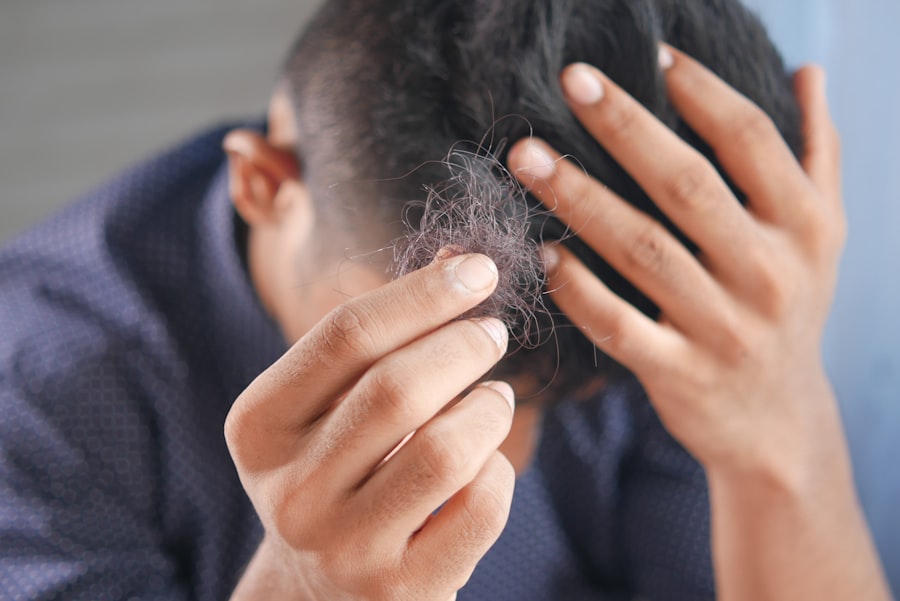
While many treatments for hair loss are effective, they are not without potential side effects and risks. Minoxidil can cause scalp irritation, itching, or unwanted facial hair growth in some users. Finasteride may lead to sexual side effects such as decreased libido or erectile dysfunction in a subset of men; these effects can persist even after discontinuation of the medication in rare cases.
It is crucial for patients to weigh these risks against the benefits when considering treatment options. Emerging therapies also carry their own set of risks. For instance, PRP therapy may result in temporary discomfort at the injection site or mild swelling.
Stem cell treatments are still largely experimental; thus, long-term safety data is limited. Patients should engage in thorough discussions with their healthcare providers about potential side effects associated with any treatment they consider.
Future Directions in Hair Loss Research
The future of hair loss research appears promising as scientists continue to explore innovative avenues for treatment. One area of focus is genetic research aimed at understanding the molecular pathways involved in hair follicle development and cycling. By identifying specific genes associated with hair loss, researchers hope to develop targeted therapies that address the root causes rather than merely alleviating symptoms.
Additionally, advancements in biotechnology may pave the way for personalized medicine approaches in treating hair loss. By analyzing an individual’s genetic makeup and response to various treatments, clinicians could tailor interventions that maximize efficacy while minimizing side effects. This shift towards personalized care could significantly enhance patient outcomes and satisfaction.
Conclusion and Recommendations for Patients
For individuals experiencing hair loss, it is essential to approach treatment options with informed decision-making. Consulting with a dermatologist or a specialist in hair restoration can provide valuable insights into the most appropriate therapies based on individual circumstances. Patients should consider factors such as the type and extent of their hair loss, their medical history, and personal preferences when evaluating treatment options.
Moreover, staying abreast of ongoing research and emerging therapies can empower patients to make choices that align with their needs and expectations. As clinical trials continue to yield promising results, new avenues for effective treatment will likely become available, offering hope for those affected by this common condition. Engaging in open dialogue with healthcare providers about potential risks and benefits will ensure that patients are well-equipped to navigate their journey toward restoring their hair and confidence.
