
Dental implant clinical trials represent a critical intersection of research, innovation, and patient care within the field of dentistry. These trials are designed to evaluate the safety, efficacy, and long-term outcomes of various dental implant systems and techniques. As the demand for dental implants continues to rise, driven by an aging population and increasing awareness of oral health, the importance of rigorous clinical trials cannot be overstated.
They provide the necessary evidence to support new technologies and treatment protocols, ensuring that patients receive the best possible care. The landscape of dental implant research is dynamic, with ongoing studies exploring a myriad of factors that influence implant success. These include the materials used in implant construction, surgical techniques, patient-specific variables, and post-operative care protocols.

By systematically investigating these elements, clinical trials contribute to a growing body of knowledge that informs clinical practice and enhances patient outcomes. The results from these trials not only guide practitioners in their decision-making but also help regulatory bodies establish guidelines for the safe use of dental implants.
Key Takeaways
- Dental implant technology has significantly evolved, improving success rates and long-term outcomes.
- New materials and advanced techniques are enhancing the durability and integration of dental implants.
- Digital imaging and 3D printing are revolutionizing implant planning and customization in clinical trials.
- Innovations in bone regeneration and tissue engineering are critical for better implant placement and healing.
- Emerging trends focus on personalized patient selection and tailored implant solutions for optimal results.
The Evolution of Dental Implant Technology

The journey of dental implant technology has been marked by significant milestones that reflect advancements in materials science, surgical techniques, and understanding of osseointegration—the process by which an implant becomes securely anchored in the jawbone. The first modern dental implants, developed in the 1960s by Swedish orthopedic surgeon Per-Ingvar Brånemark, utilized titanium due to its biocompatibility and ability to integrate with bone. This groundbreaking discovery laid the foundation for contemporary implantology and set the stage for further innovations.
Over the decades, dental implants have evolved from simple cylindrical shapes to more complex designs that enhance stability and promote better integration with surrounding tissues. The introduction of surface modifications, such as sandblasting and acid etching, has improved the osseointegration process by increasing the surface area available for bone contact. Additionally, advancements in implant geometry have led to tapered designs that facilitate placement in challenging anatomical sites.
These technological improvements have not only increased the success rates of implants but have also expanded their applicability to a broader range of patients.
New Materials and Techniques in Dental Implant Research
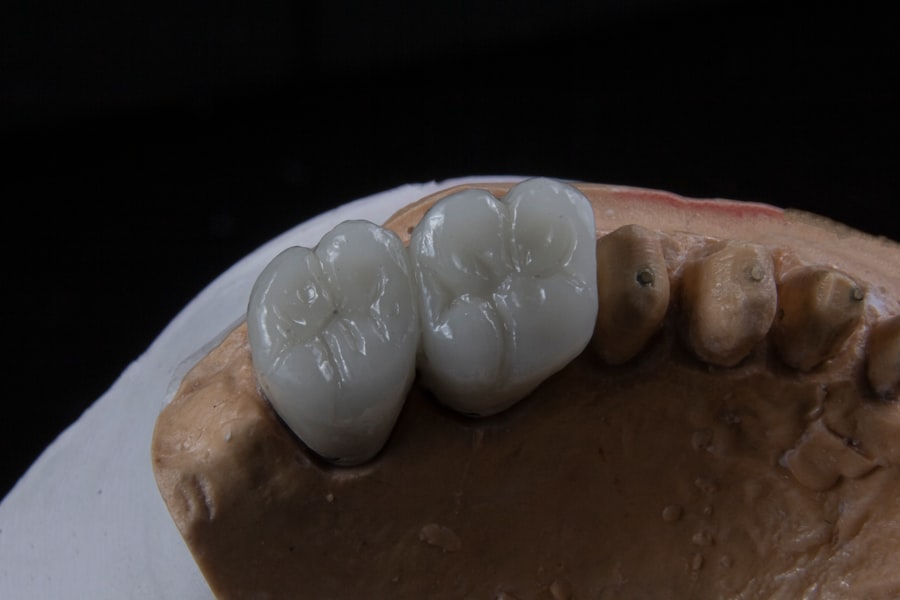
Recent research in dental implants has focused on exploring new materials that can further enhance the performance and longevity of implants. While titanium remains the gold standard, alternative materials such as zirconia are gaining traction due to their aesthetic properties and biocompatibility. Zirconia implants offer a tooth-colored option that can be particularly advantageous for patients with thin gingival biotypes or those seeking a more natural appearance.
Clinical trials are underway to assess the long-term success rates of zirconia implants compared to traditional titanium options. In addition to material innovations, novel techniques are being developed to optimize implant placement and integration. One such technique is guided implant surgery, which utilizes computer-generated templates based on 3D imaging to ensure precise placement of implants.
This method minimizes surgical trauma and enhances accuracy, leading to improved outcomes. Furthermore, research into minimally invasive surgical techniques is gaining momentum, with studies indicating that less invasive approaches can reduce recovery times and postoperative complications while maintaining high success rates.
Advancements in Implant Success Rates and Long-Term Outcomes
The success rates of dental implants have seen remarkable improvements over the years, largely due to advancements in surgical techniques, materials, and patient management strategies. Current data suggests that success rates for dental implants can exceed 95% in healthy patients with adequate bone density. Clinical trials have played a pivotal role in establishing these success rates by providing robust evidence through long-term follow-up studies that track patient outcomes over several years.
Long-term outcomes are particularly important in assessing the viability of dental implants as a treatment option. Research has shown that factors such as smoking status, diabetes control, and oral hygiene practices significantly influence implant longevity. Clinical trials often include diverse patient populations to better understand how these variables affect outcomes.
For instance, studies have demonstrated that patients with well-controlled diabetes can achieve success rates comparable to non-diabetic individuals when proper protocols are followed. This knowledge allows clinicians to tailor their approaches based on individual patient risk factors.
The Role of Digital Imaging and 3D Printing in Dental Implant Trials
| Trial ID | Study Title | Number of Participants | Implant Type | Duration (Months) | Primary Outcome | Status |
|---|---|---|---|---|---|---|
| NCT04567890 | Comparison of Titanium vs Zirconia Dental Implants | 120 | Titanium, Zirconia | 24 | Osseointegration success rate | Completed |
| NCT03812345 | Immediate vs Delayed Loading of Dental Implants | 80 | Titanium | 12 | Implant stability and survival | Recruiting |
| NCT05098765 | Effect of Surface Treatment on Implant Success | 100 | Titanium with different surface coatings | 18 | Bone-to-implant contact percentage | Active, not recruiting |
| NCT04234567 | Long-term Outcomes of Mini Dental Implants | 60 | Mini implants | 36 | Survival rate and patient satisfaction | Completed |
| NCT04789123 | Use of Growth Factors in Dental Implant Healing | 90 | Titanium with growth factor coating | 12 | Healing time and implant integration | Recruiting |
Digital imaging technologies have revolutionized the planning and execution of dental implant procedures. Cone beam computed tomography (CBCT) provides detailed three-dimensional images of the jawbone and surrounding structures, allowing for precise assessment of bone quality and quantity prior to surgery. This imaging modality is invaluable in clinical trials as it enables researchers to gather comprehensive data on anatomical variations that may impact implant placement.
Moreover, 3D printing has emerged as a transformative tool in dental implant research and practice. Custom surgical guides created through 3D printing allow for enhanced accuracy during implant placement, reducing the risk of complications associated with misalignment. Additionally, researchers are exploring the use of 3D-printed implants made from biocompatible materials that can be tailored to individual patient anatomy.
These innovations not only improve surgical outcomes but also contribute to a more personalized approach to dental implant therapy.
Innovations in Bone Regeneration and Tissue Engineering for Implant Placement
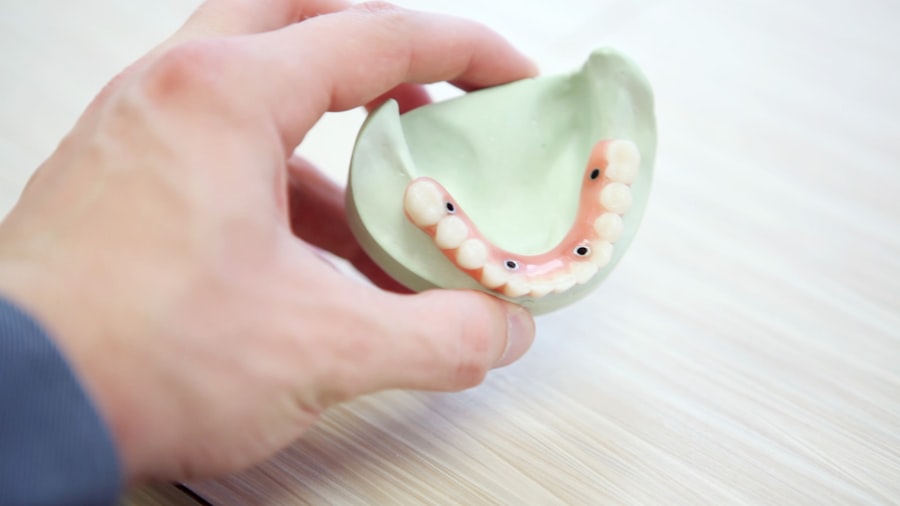
Bone regeneration techniques are critical for patients who lack sufficient bone volume for traditional implant placement. Clinical trials are increasingly focusing on innovative approaches to enhance bone healing and regeneration. One promising area of research involves the use of growth factors and stem cells to stimulate bone formation around implants.
For example, studies have shown that incorporating platelet-rich plasma (PRP) into grafting materials can accelerate healing and improve osseointegration. Tissue engineering is another frontier in dental implant research that holds great promise for improving outcomes in challenging cases. Researchers are investigating scaffolds made from biodegradable materials that can support cell growth and tissue regeneration around implants.
These scaffolds can be infused with bioactive molecules that promote healing and integration with surrounding bone. Clinical trials evaluating these advanced techniques are essential for determining their efficacy and safety in real-world applications.
Emerging Trends in Patient Selection and Customization of Dental Implants
As our understanding of patient-specific factors continues to evolve, so too does the approach to patient selection for dental implants. Emerging trends emphasize the importance of personalized treatment plans that consider individual anatomical variations, medical history, and lifestyle factors. Clinical trials are increasingly incorporating diverse patient populations to identify which groups may benefit most from specific implant systems or techniques.
Customization of dental implants is also gaining traction as a means to enhance outcomes. Advances in digital technology allow for the creation of patient-specific implants tailored to fit unique anatomical features. This customization can improve both functional and aesthetic results while minimizing complications associated with ill-fitting devices.
Ongoing clinical trials are exploring the effectiveness of these personalized approaches compared to traditional methods, providing valuable insights into their potential benefits.
Future Directions and Potential Breakthroughs in Dental Implant Clinical Trials
Looking ahead, the future of dental implant clinical trials is poised for exciting developments driven by technological advancements and a deeper understanding of biological processes involved in osseointegration. One potential breakthrough lies in the integration of artificial intelligence (AI) into treatment planning and outcome prediction. AI algorithms can analyze vast amounts of data from previous clinical trials to identify patterns that may inform better decision-making for individual patients.
Additionally, ongoing research into biomaterials that actively promote healing could lead to significant improvements in implant success rates. For instance, bioactive coatings that release therapeutic agents over time may enhance osseointegration while reducing inflammation at the surgical site. As these innovations come to fruition, clinical trials will play a crucial role in validating their effectiveness and safety before they become standard practice.
In summary, dental implant clinical trials are at the forefront of advancing oral health care through rigorous research and innovation. As technology continues to evolve, so too will our understanding of how best to serve patients seeking dental implants, ultimately leading to improved outcomes and enhanced quality of life for individuals with missing teeth.
