
Preclinical testing serves as a critical phase in the drug development process, acting as a bridge between laboratory research and clinical trials. This stage is essential for evaluating the safety and efficacy of new therapeutic agents before they are administered to humans. Preclinical testing typically involves a series of experiments conducted in vitro (in the lab) and in vivo (in living organisms) to gather preliminary data on the pharmacological properties of a drug candidate.
The primary goal is to identify any potential toxic effects, determine appropriate dosages, and establish a foundational understanding of how the drug interacts with biological systems. The significance of preclinical testing cannot be overstated, as it lays the groundwork for subsequent clinical trials. Regulatory agencies, such as the U.S.

Food and Drug Administration (FDA) and the European Medicines Agency (EMA), require comprehensive preclinical data to ensure that only safe and effective drugs progress to human testing. This phase not only helps in identifying promising candidates but also aids in the elimination of those that may pose unacceptable risks. As such, preclinical testing is a vital component of the drug development pipeline, influencing both the scientific and regulatory landscapes.
Key Takeaways
- Preclinical testing is essential for evaluating drug safety and efficacy before human trials.
- Animal models play a crucial role in simulating human biological responses during preclinical studies.
- Ethical concerns require strict regulations and alternatives to minimize animal use in testing.
- Advances in technology, such as in vitro methods and computer modeling, are improving preclinical testing accuracy.
- Despite progress, challenges like predictive limitations and ethical issues continue to shape future research directions.
The Role of Preclinical Testing in Drug Development

Preclinical testing plays a multifaceted role in drug development, serving as both a safety net and a guiding framework for researchers. One of its primary functions is to assess the pharmacokinetics and pharmacodynamics of drug candidates. Pharmacokinetics involves studying how a drug is absorbed, distributed, metabolized, and excreted by the body, while pharmacodynamics focuses on the drug’s biological effects and mechanisms of action.
By understanding these parameters, researchers can make informed decisions about dosage regimens and potential therapeutic windows. Moreover, preclinical testing provides invaluable insights into the potential therapeutic applications of a drug. For instance, through various assays and models, researchers can explore how a drug interacts with specific biological targets, such as enzymes or receptors implicated in disease processes.
This information not only helps in refining the drug’s development strategy but also aids in identifying patient populations that may benefit most from the treatment. Ultimately, preclinical testing serves as a critical checkpoint that informs the transition from laboratory research to clinical application.
Types of Preclinical Testing
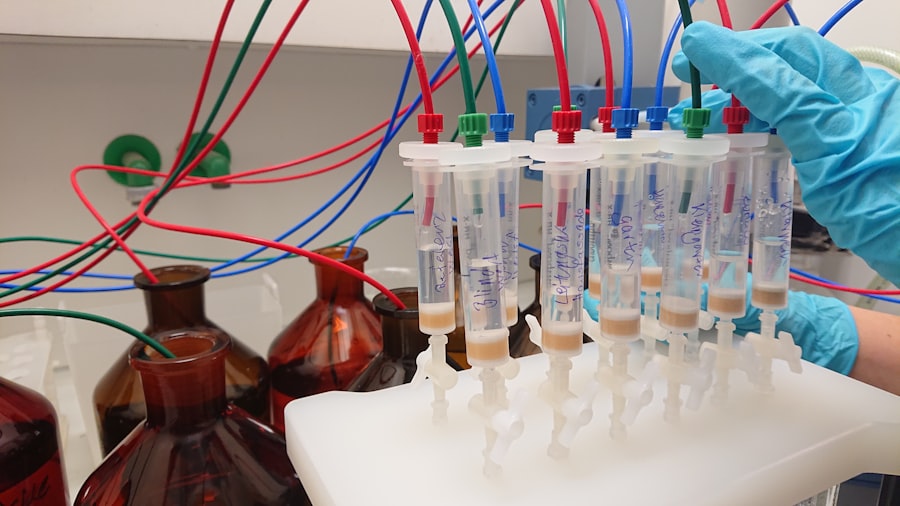
Preclinical testing encompasses a diverse array of methodologies designed to evaluate different aspects of drug candidates. One of the most common types is in vitro testing, which involves experiments conducted on cell cultures or isolated tissues. These tests allow researchers to assess cellular responses to drugs, including cytotoxicity, receptor binding affinity, and signaling pathway activation.
In vitro studies are often the first step in screening compounds for their potential therapeutic effects and are instrumental in identifying lead candidates for further development. In contrast, in vivo testing involves the use of animal models to evaluate the pharmacological effects of a drug within a living organism. This type of testing is crucial for understanding how a drug behaves in a complex biological environment, where multiple systems interact.
Animal studies can provide insights into a drug’s efficacy against specific diseases, its side effects, and its overall safety profile. Commonly used animal models include rodents, such as mice and rats, as well as larger mammals like dogs or primates, depending on the nature of the disease being studied and the intended human application.
Importance of Animal Models in Preclinical Testing
Animal models are indispensable in preclinical testing due to their ability to mimic human physiology and disease states. They provide a more comprehensive understanding of how a drug will perform in humans compared to in vitro studies alone. For example, certain pharmacokinetic properties, such as absorption and metabolism, can vary significantly between species; thus, animal studies help bridge this gap by providing data that are more predictive of human responses.
Furthermore, animal models are essential for evaluating complex interactions within biological systems that cannot be replicated in vitro. For instance, studying cancer therapies often requires an understanding of tumor microenvironments, immune responses, and systemic effects that can only be observed in living organisms. By utilizing appropriate animal models, researchers can assess not only the efficacy of a drug but also its safety profile in relation to various physiological processes.
This holistic approach is crucial for identifying potential adverse effects that may arise from long-term exposure or at therapeutic doses.
Ethical Considerations in Preclinical Testing
| Metric | Description | Typical Range/Value | Importance |
|---|---|---|---|
| In vitro Assay Success Rate | Percentage of compounds showing desired activity in cell-based or biochemical assays | 30% – 50% | Indicates initial compound efficacy and potential |
| In vivo Efficacy Rate | Percentage of compounds demonstrating efficacy in animal models | 10% – 20% | Predicts likelihood of success in further development |
| Toxicity Assessment | Evaluation of adverse effects in animal studies (acute and chronic) | Varies by compound; no observed adverse effect level (NOAEL) determined | Ensures safety before clinical trials |
| Pharmacokinetics (PK) Parameters | Absorption, distribution, metabolism, and excretion profiles in animals | Half-life: hours to days; Bioavailability: 20% – 80% | Helps optimize dosing and delivery |
| Number of Animal Species Tested | Species used for toxicity and efficacy studies (commonly rodents and non-rodents) | 2 species (e.g., rat and dog) | Regulatory requirement for safety evaluation |
| Duration of Preclinical Studies | Time taken to complete all preclinical testing phases | 1 – 3 years | Impacts overall drug development timeline |
| Compound Attrition Rate | Percentage of compounds dropped during preclinical testing | 70% – 90% | Reflects challenges in drug candidate selection |
The use of animals in preclinical testing raises significant ethical considerations that must be addressed by researchers and regulatory bodies alike. The principle of the “Three Rs”—Replacement, Reduction, and Refinement—serves as a guiding framework for ethical animal research. Replacement refers to methods that avoid or replace the use of animals whenever possible; reduction emphasizes minimizing the number of animals used in experiments; and refinement focuses on enhancing animal welfare by improving experimental techniques and housing conditions.
Researchers are increasingly encouraged to explore alternative methods that can supplement or replace animal testing. Advances in technology have led to the development of sophisticated in vitro models, such as organ-on-a-chip systems and 3D tissue cultures, which can provide valuable data without relying solely on animal subjects. However, while these alternatives show promise, they cannot yet fully replicate the complexity of living organisms.
Therefore, ethical considerations must balance scientific rigor with humane treatment of animals, ensuring that their use is justified by significant potential benefits.
Advancements in Preclinical Testing Techniques

Recent years have witnessed remarkable advancements in preclinical testing techniques that enhance both efficiency and accuracy. One notable development is the integration of high-throughput screening methods that allow researchers to rapidly evaluate thousands of compounds for their biological activity against specific targets. This approach accelerates the identification of lead candidates while reducing resource expenditure.
Additionally, advancements in imaging technologies have revolutionized preclinical testing by enabling real-time monitoring of drug effects within living organisms. Techniques such as positron emission tomography (PET) and magnetic resonance imaging (MRI) allow researchers to visualize how drugs distribute throughout the body and interact with target tissues over time. These imaging modalities provide critical insights into pharmacokinetics and therapeutic efficacy while minimizing invasive procedures.
Challenges and Limitations of Preclinical Testing
Despite its importance, preclinical testing is not without challenges and limitations that can impact drug development outcomes. One significant issue is the translational gap between animal models and human responses. While animal studies provide valuable insights, they do not always accurately predict human reactions due to species-specific differences in physiology and metabolism.
This discrepancy can lead to failures in clinical trials when drugs that appeared promising in preclinical stages do not yield similar results in humans. Another challenge lies in the complexity of diseases themselves. Many conditions, such as cancer or neurodegenerative disorders, involve multifactorial processes that are difficult to replicate in animal models.
As a result, researchers may struggle to capture the full spectrum of disease pathology or treatment responses during preclinical testing. This limitation underscores the need for continuous refinement of animal models and exploration of alternative methodologies that can better mimic human disease states.
Future Directions in Preclinical Testing
Looking ahead, the future of preclinical testing is poised for transformative changes driven by technological innovations and evolving scientific paradigms. One promising direction is the increased adoption of personalized medicine approaches that tailor treatments based on individual genetic profiles. Advances in genomics and bioinformatics are enabling researchers to identify specific biomarkers associated with disease susceptibility and treatment response, paving the way for more targeted therapies.
Moreover, artificial intelligence (AI) and machine learning are beginning to play pivotal roles in preclinical testing by analyzing vast datasets to predict drug interactions and outcomes more accurately. These technologies can streamline the drug discovery process by identifying promising candidates more efficiently while minimizing reliance on traditional trial-and-error methods. As regulatory frameworks evolve to accommodate these advancements, there is potential for more adaptive preclinical testing strategies that incorporate real-world evidence and patient-centric approaches.
By embracing innovation while addressing ethical considerations, the field can enhance its capacity to deliver safe and effective therapies to patients more rapidly than ever before.
